
Forty years ago, Shenzhen was a modest fishing village of thirty thousand souls, a sleepy backwater on the edge of the Pearl River Delta. Today, it is China’s undisputed Silicon Valley, a sprawling metropolis of seventeen million that has given the world Tencent's WeChat, DJI's drones, Huawei's 5G, and BYD's electric vehicles. For international professionals in high-tech, finance, internet, and smart manufacturing, this is not merely a city to visit; it is a city to absorb, a place where the future is being engineered in real time. And now, thanks to China's expanded 240‑hour visa‑free transit policy, which covers eligible entry points across Guangdong Province, including Shenzhen Bao'an International Airport and the high‑speed rail link from Hong Kong, citizens from over fifty countries can step into this crucible of innovation without the friction of a traditional visa application.
Imagine a week that seamlessly blends high‑stakes business with genuine cultural discovery and quiet moments of relaxation. This is the essence of bleisure, business meeting leisure, and Shenzhen proves the perfect canvas. Landing at the ultra‑modern airport, visitors are immediately struck by the city's palpable hum of ambition. Before diving into meetings, a gentle orientation at the Shenzhen Museum in the Futian Civic Center offers a vital primer: from Neolithic tools to the Special Economic Zone decree of 1980, and on to the breakneck rise of companies that now define global tech, the museum tells a story of miraculous reinvention. A short stroll away, Lianhuashan Park, or Lotus Hill in English, offers a gentle climb to its summit, where the entire Futian CBD skyline unfurls like a circuit board, with the Ping An Finance Centre, the world's fifth‑tallest building, standing as a gleaming exclamation point. Here, at sunset, the city's relentless energy softens into something almost meditative, the perfect prelude to a week of discovery.
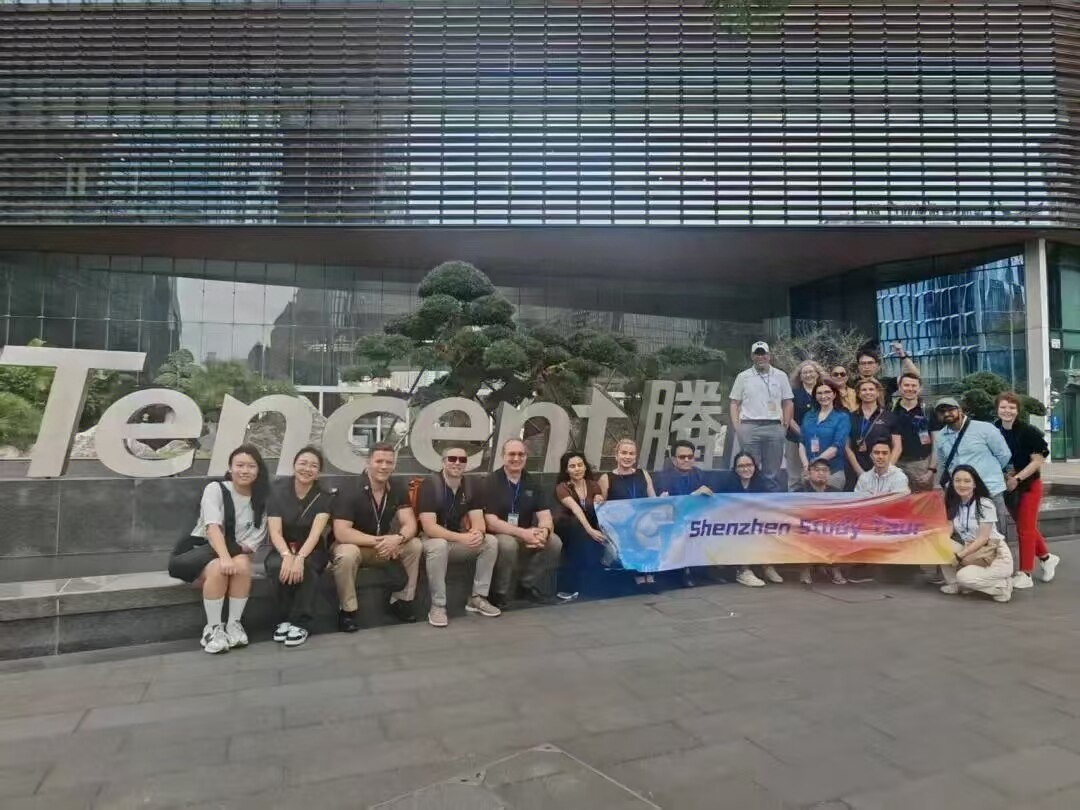
A group of college students and professors visiting Tencent Headquarters
The tech pilgrimage proper begins at the renowned Tencent Headquarters, the nerve center of the company that brought WeChat to over a billion users. While individual walk‑ins are restricted, curated tech tours arranged by specialist agencies can unlock access to the company's exhibition hall and technological innovation display zone, where immersive theaters and interactive labs reveal the latest breakthroughs in AI, healthcare, and digital ecosystems. The architecture itself, twin towers connected by daring sky bridges, symbolizes the connective mission that drives the company's global reach. From there, a short journey west to Qianhai, Shenzhen's "Little Silicon Valley", reveals a dedicated new urban hub designed to attract the world's brightest startups. At the Qianhai Exhibition Center, entrepreneurs discover a front‑row view of preferential policies for foreign‑invested tech firms, making this one of China's most fertile grounds for launching or scaling a business. The evening offers a perfect decompression at the OCT Loft Creative Culture Park, a repurposed factory complex now buzzing with galleries, design studios, and cafés. Here, amid exposed brick and steel beams, the city's creative youth trade ideas over pour‑over coffee, and the boundaries between work and play dissolve entirely.
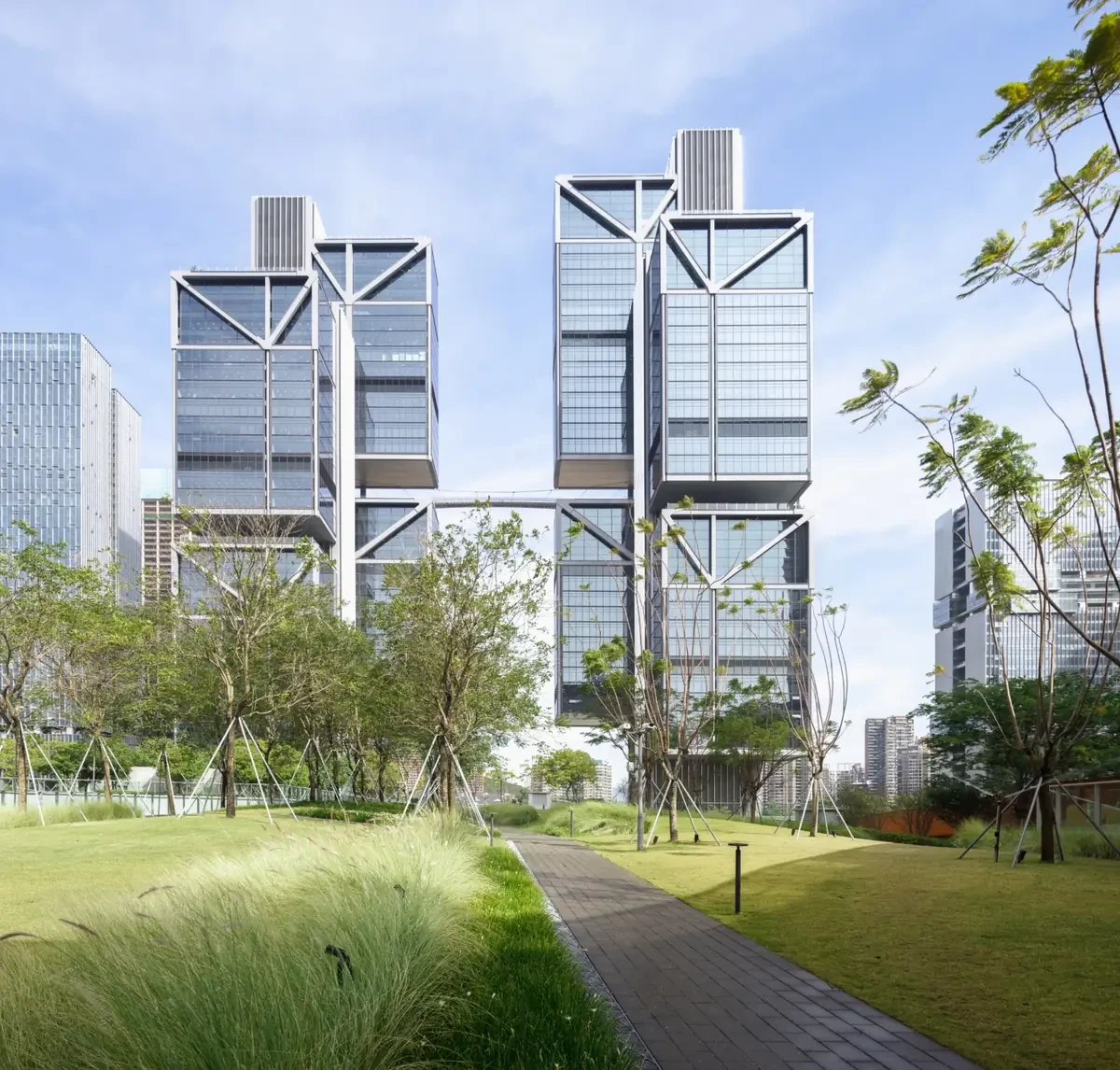
Futuristic geometric architecture of DJI Sky City, Shenzhen’s drone innovation hub
No visit to Shenzhen is complete without stepping into the future of flight at DJI Sky City, the global headquarters of the world's largest drone manufacturer. Completed in 2022, this twin‑tower marvel rises over two hundred meters, with one tower dedicated entirely to research and development. A guided tour reveals more than just cutting‑edge engineering; visitors can walk the awe‑inspiring suspension bridge that connects the two towers on the twenty‑fourth floor, explore a Zen rock garden at the entrance, and browse an exclusive brand shop for merchandise found nowhere else on earth. For a truly futuristic taste of daily life, tech tours often include demonstrations of drone food delivery, ordering a coffee and watching it descend from the sky, followed by a ride in an autonomous robotaxi, then dinner at a restaurant where a UFO‑shaped robot delivers the meal to the table. These are not gimmicks; they are living prototypes of a world that is already arriving in Shenzhen.
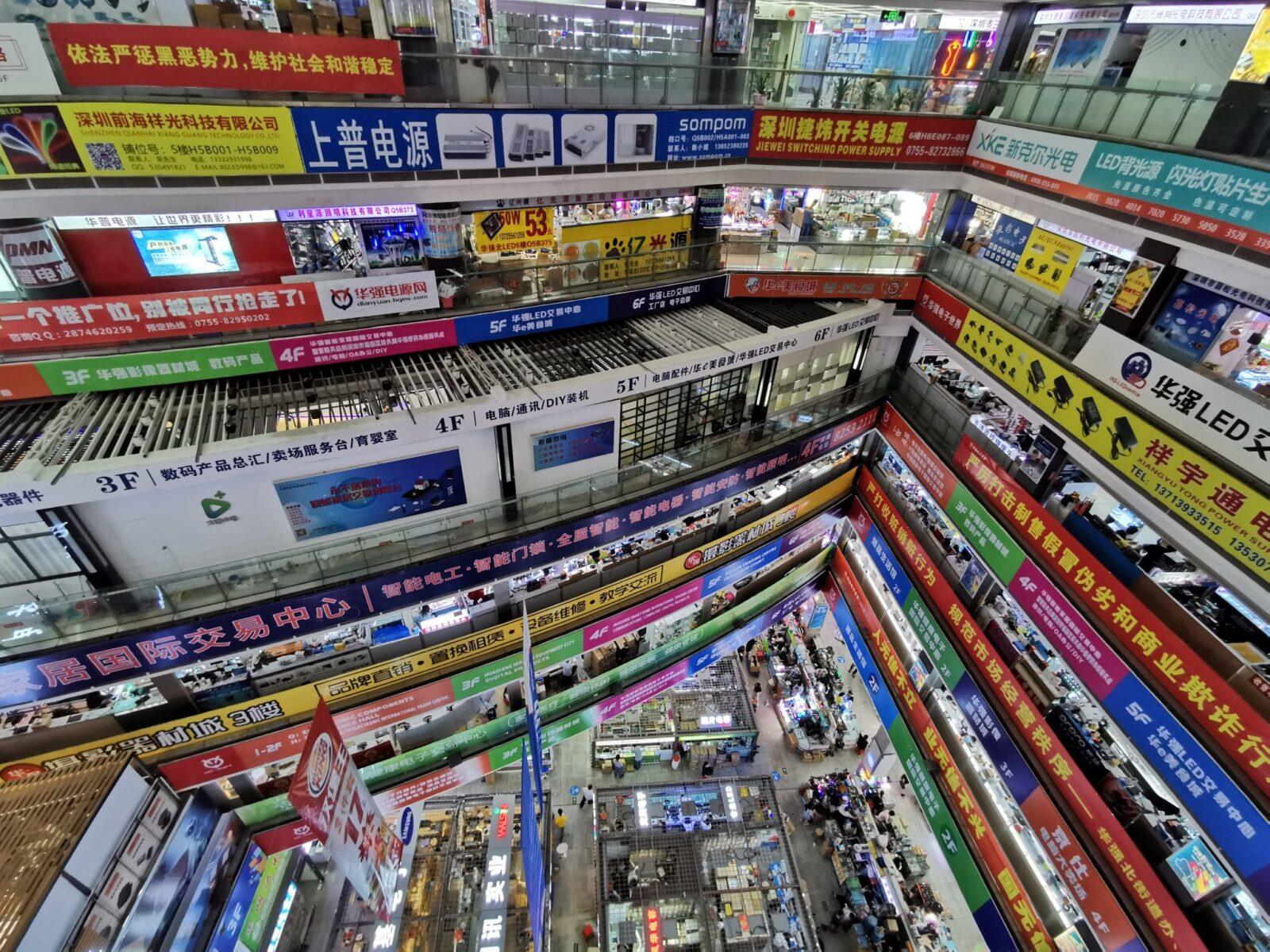
Overlooking stacked multi-level stalls lined with glowing vendor banners at Huaqiangbei Electronics Market, Shenzhen’s world-famous hub for circuit parts, LED screens, power supplies, and DIY tech gear
Yet the city's heart beats just as strongly in its consumer electronics epicenter: Huaqiangbei, the world's largest electronics market. Walking through its labyrinthine corridors, visitors are surrounded by mountains of raw components, circuit boards, finished smartphones, and AI‑powered gadgets. This sensory overload represents the global supply chain in miniature. With a knowledgeable guide to navigate the maze and negotiate prices, this is more than shopping; it is a masterclass in global manufacturing. Just minutes away, the flagship stores of Huawei, Xiaomi, NIO, and XPeng invite visitors to test foldable screens, sit inside electric vehicles, and feel the consumer‑facing edge of China's tech revolution. And then, in a delightful twist, the evening can be spent at Dongmen Old Street, a bustling commercial district where locals have haggled for daily goods since the Qing Dynasty, over four hundred years ago. Sampling spicy Sichuan skewers and Cantonese egg waffles amid the neon lights, one realises that Shenzhen's identity is built on layers of history, not just silicon.
Balancing the digital whirlwind with cultural grounding, the itinerary leads to Nantou Ancient City in the Nanshan district, once Shenzhen's maritime, political, and economic stronghold, now a revitalised historic gem where traditional buildings house contemporary art spaces, boutique shops, and creative pop‑ups. This walk through old alleyways offers a rare glimpse of pre‑boom Shenzhen. Just a short drive away, Dafen Oil Painting Village reveals yet another facet of local genius: thousands of artists reproducing masterpieces from Van Gogh to Monet, and creating original works that fill the narrow alleys with colour. Many visitors commission custom paintings to take home, a lasting, tangible souvenir of their journey. As evening falls, Shenzhen Bay Park offers a sprawling waterfront promenade, where the lights of Hong Kong flicker across the water, and locals jog, cycle, and watch the sunset in a communal ritual of quiet contentment.
For those in smart manufacturing, AI, or robotics, the deep‑dive experiences are unparalleled. By visiting specialised robotics exhibition halls or working factories, visitors can interact with robot dogs, robotic arms, and humanoid machines already deployed in real‑world factories, hospitals, and homes. This immersive day often concludes at the Shenzhen Bay Culture Park, a brand‑new cultural landmark that seamlessly connects exhibitions, performances, and leisure, proof that Shenzhen's ambition extends to the arts. Evenings in Shenzhen are wonderfully flexible: one might network with founders at a bustling coworking space, attend a tech meetup in a pop‑up venue, or simply return to the artistic enclave of OCT Loft for live music or an art opening.
The final days are for reflection, shopping, and lingering. A return to Lianhuashan Park for one last skyline view, or a wander through the Museum of Contemporary Art and Urban Planning (MOCAUP), with its stunning silver facade and cutting‑edge exhibitions, provides a thoughtful coda to the week. Last‑minute gadget hunting at Huaqiangbei or fashion finds at Luohu Commercial City, one of the busiest border crossings with Hong Kong, rounds out the experience. When the time comes to depart for Shenzhen Bao'an International Airport or the high‑speed rail station, visitors leave with far more than luggage full of souvenirs; they carry a visceral understanding of how a city can reinvent itself, and perhaps, a spark of inspiration for how they might reinvent their own work.
Shenzhen is not merely a destination; it is a state of mind, a city that rewards curiosity, welcomes risk, and moves at the speed of light. With the 240‑hour visa‑free policy making entry frictionless and Hong Kong just fourteen minutes away by high‑speed rail, the region has never been more accessible. For those who wish to tailor this bleisure blueprint to their specific industry, Into South China stands ready as your specialist inbound travel agency, covering Guangdong, Guangxi, Hainan, Hong Kong, and Macau. From arranging VIP visits to company headquarters to providing on‑ground interpretation and logistical support, they ensure that every moment is productive, enriching, and effortlessly enjoyable.
The future is being built in Shenzhen. Come see it for yourself, and while you are here, rediscover the joy of living well.
Client Review
"An unforgettable journey through South China's most breathtaking landscapes and cultural treasures. Every detail was perfectly arranged, from authentic local experiences to comfortable accommodations. Highly recommended for travelers seeking genuine immersion!"
Trip Highlights
- ✓
Authentic Local Experiences
Immerse yourself in daily life, culture, and traditions of South China
- ✓
Scenic Natural Wonders
Breathtaking landscapes from karst peaks to tropical beaches
- ✓
Culinary Discoveries
Taste regional specialties and authentic local flavors
- ✓
Cultural Heritage Sites
Explore ancient temples, historic architecture, and UNESCO sites


