Walk through Shenzhen's Futian CBD at night, and the skyline looks like a screensaver: glass towers, LED ribbons, and the silent swoosh of electric taxis. It is a city that seems to have materialised from nothing, which is roughly what happened. In 1980, this was farmland and fishing villages. Today, it houses over 17 million people. The official slogan captures the city's deal with its residents: "Once you come to Shenzhen, you are a Shenzhener." It does not ask where you were born. It asks what you can do.
Among the millions who accepted this invitation, three groups stand out by sheer demographic weight. Migrants from Hunan and the northeast poured in to build roads, run restaurants, staff factories, and fill the city with the chaotic energy of ambition. But there is another community whose fingerprints are everywhere, even if they rarely make the headlines in English-language media. They are the Teochew people, and to understand Shenzhen beyond its skyline, you need to understand them.
Where the Teochew Come From, and Why They Left
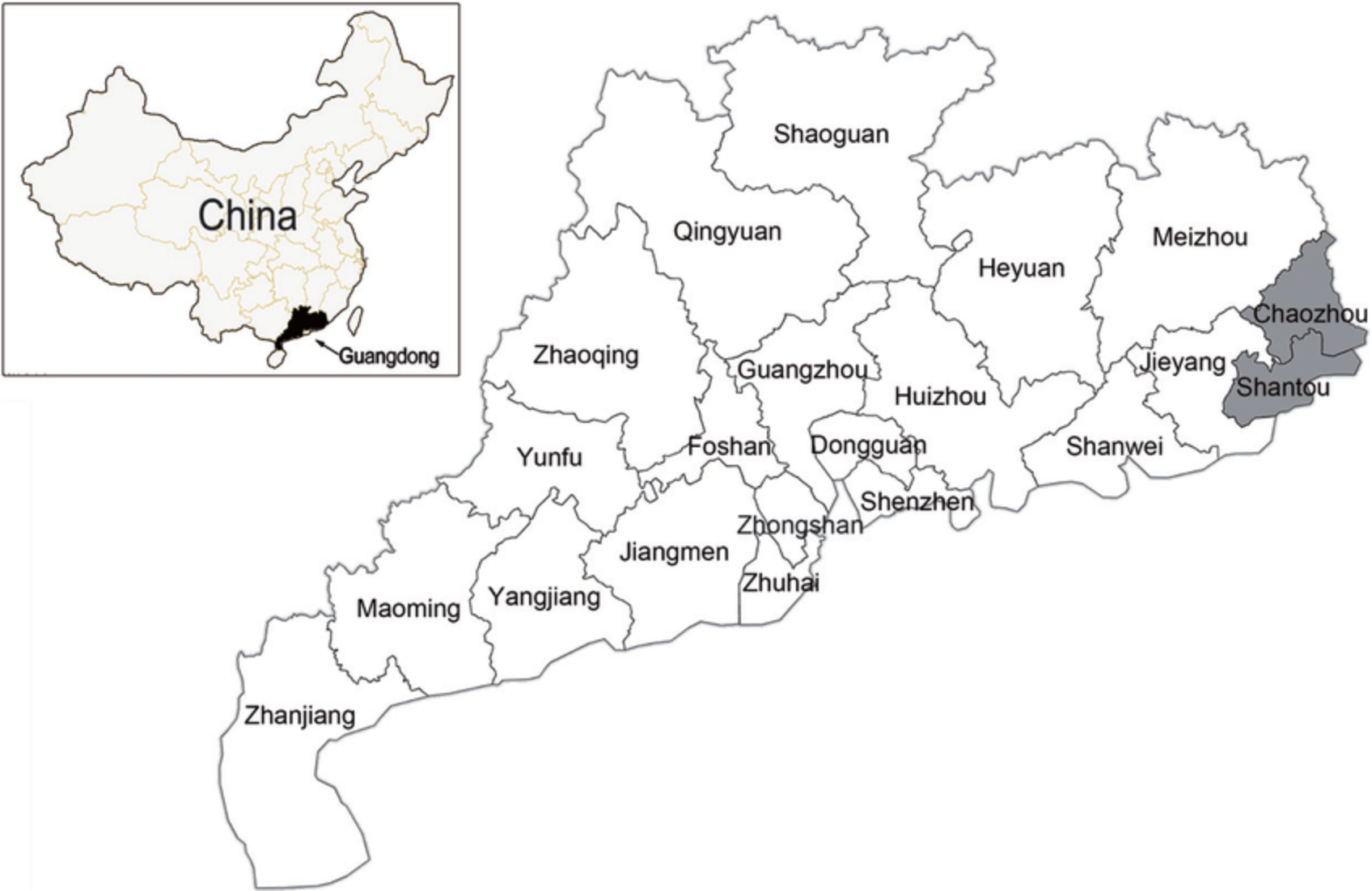
Map showing the geographic location of the Chaoshan region by Li-Ye Yang
Before we talk about Shenzhen, we need to visit a different corner of Guangdong. The Chaoshan region, named after the twin cities of Chaozhou and Shantou, sits on the province's eastern coast, facing the South China Sea. For centuries, its geography was a curse and a teacher. The old saying describes it as "three parts mountain, six parts sea, one part field." Arable land was painfully scarce. The ocean was the only open road.
So the Teochew became a people who leave. From the 18th century onward, waves of young men and women boarded junks and sailed for Southeast Asia, a journey they called "going to the Nanyang". They settled in Thailand, Malaysia, Indonesia, and Vietnam, building trading networks, planting rubber, and opening small businesses. They carried little more than a dialect unintelligible to most other Chinese, a knack for commerce, and an almost terrifying tolerance for hard work. The Nanyang experience forged a culture that values risk-taking, mutual aid, and a stubborn refusal to be impressed by titles or backgrounds. A handshake over a cup of gongfu cha is worth more than a contract. A relative's introduction opens more doors than a university degree.
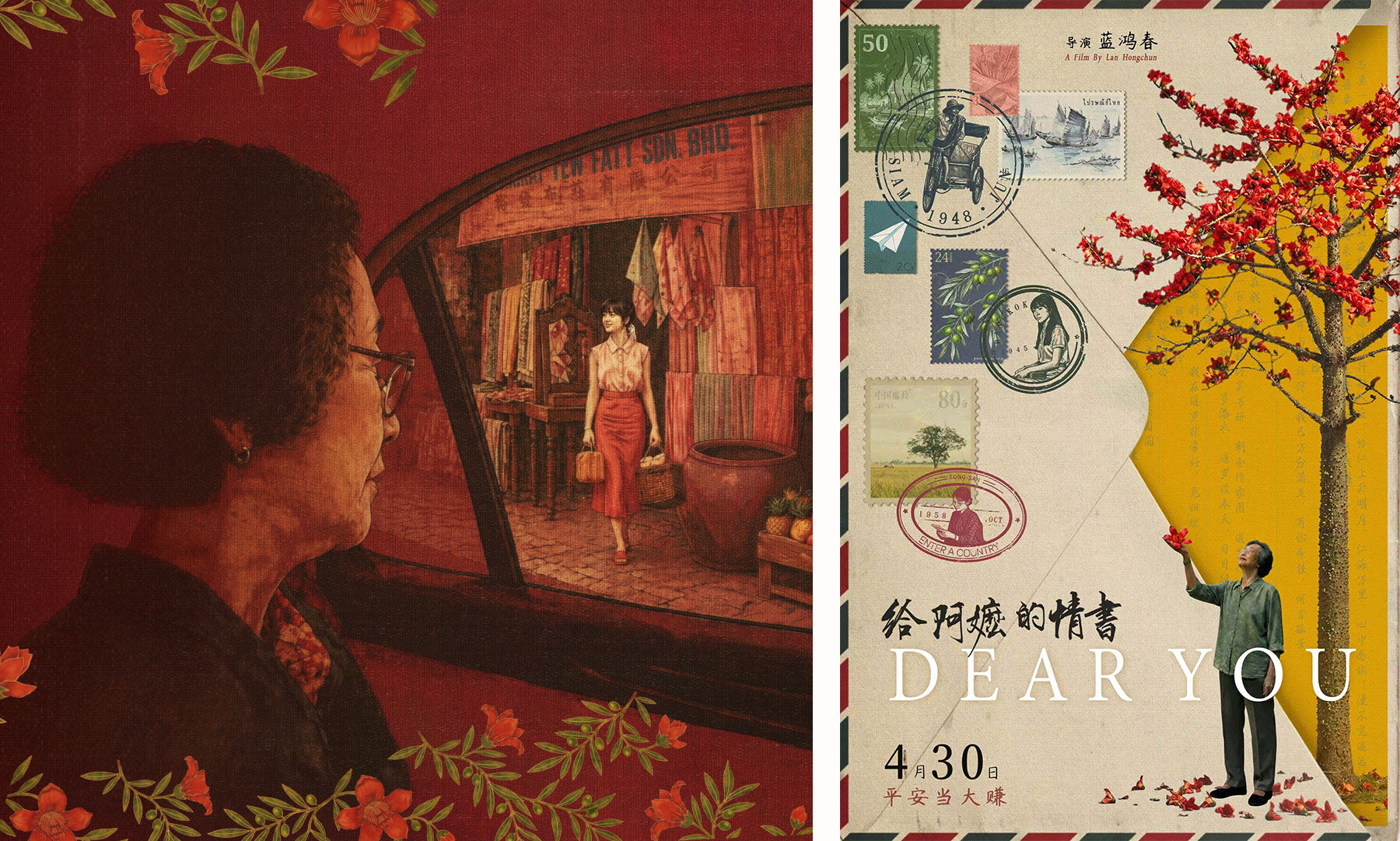
Image of the film Dear You via Sixth Tone
This deep bond between those who left and those who stayed behind, the grandmothers who raised the next generation, the ancestral homes maintained for decades awaiting a return that might never come, is the emotional core of Teochew identity. In 2026, the film Dear You (《写给阿嫲的情书》), a sleeper hit that became one of China's most talked-about releases, brought this story to millions of viewers. It follows a young Teochew woman returning to her grandmother's village in Chaoshan, tracing the intergenerational threads of love, duty, and separation that define families shaped by the Nanyang migration. For foreign viewers, the film offers a rare, intimate window into why Teochew culture places such weight on kinship, on the cups of tea poured in ancestral halls, and on the quiet obligation to honour the people who stayed so that others could leave. This was the cultural software the Teochew brought with them when they heard, around 1980, that China was building something new just across the Delta.
Building the Miracle, One Counter at a Time
When Shenzhen was declared a Special Economic Zone, it needed everything: roads, factories, dormitories, supply chains, and above all, people willing to do the unglamorous work of building a city from scratch. Teochew migrants, many of them young and with nothing to lose, arrived in the early waves. They dug foundations and pushed carts. They opened the tiny food stalls that fed the construction crews. Some of the first electronics traders in what would become Huaqiangbei were Teochew, renting glass counters no wider than a doorframe and selling components imported from Hong Kong and Taiwan. They did not look impressive. They were impressive.
The Teochew way of doing business gave them a structural advantage. New arrivals from the hometown villages would be sponsored by an uncle or a cousin who already had a stall. They would work without pay, learning the trade and the dialect of the market, until they had saved enough to open their own counter a few metres away. Rivals, but still family. This created a dense, trust-based network that allowed information, credit, and inventory to move at a speed that formal companies could not match. Ask a Huaqiangbei veteran today why a certain obscure component can be sourced in an hour, and the answer often traces back to a Teochew clan network that spans Shenzhen, Hong Kong, and Bangkok.
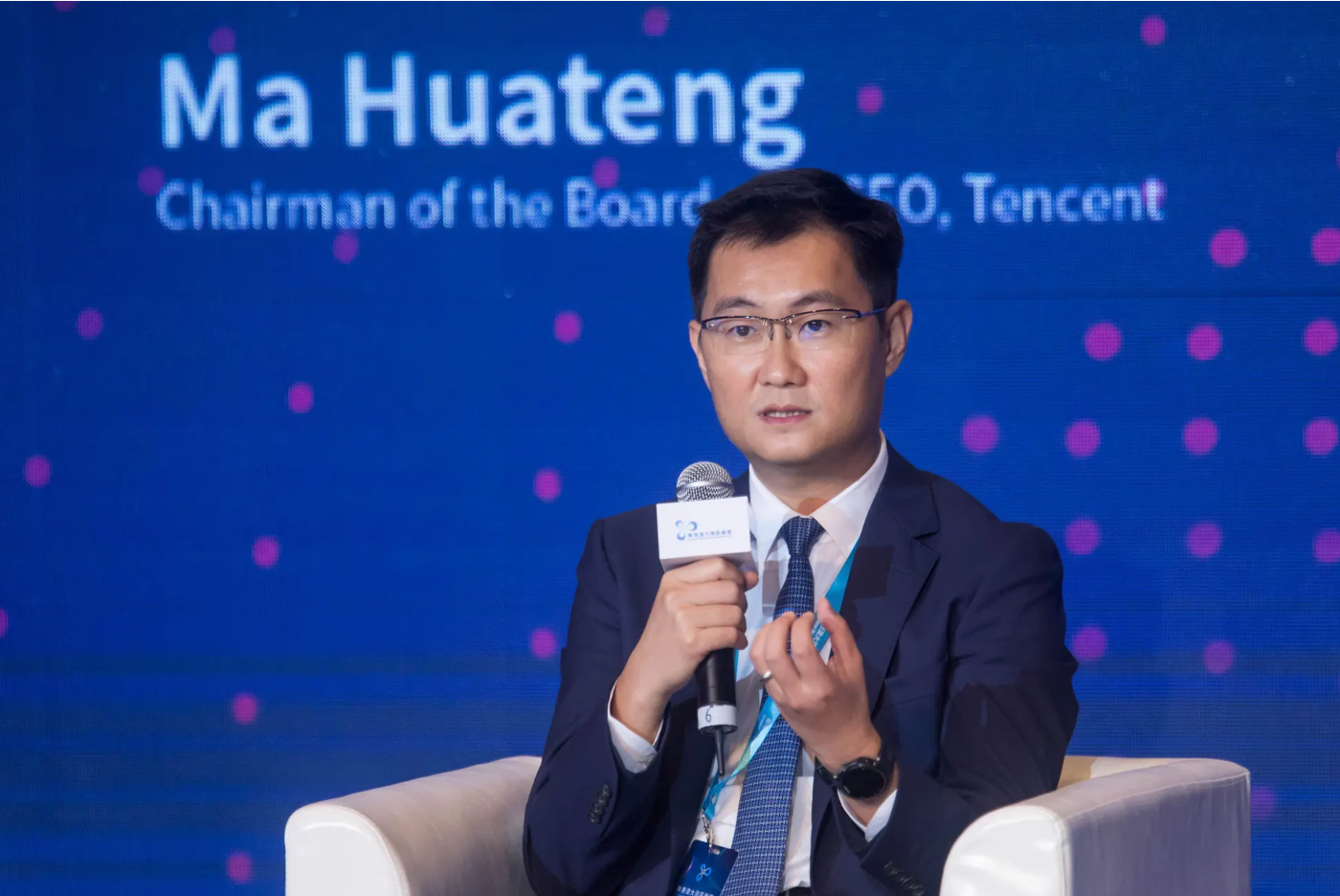
Pony Ma, chairman and CEO of Tencent Holdings Ltd., speaks during the Guangdong-Hong Kong-Macao Greater Bay Area Forum in Hong Kong
The most famous product of this environment did not come from a counter stall but from a Shenzhen university dorm. Ma Huateng, known to the world as Pony Ma, was born in Hainan to Teochew parents and grew up in Shenzhen. He studied computer science at Shenzhen University and founded Tencent in 1998, a company that would grow into one of the world's largest internet conglomerates, the force behind WeChat and a hundred other services. Pony Ma is famously reserved, uncomfortable in the spotlight, and fiercely focused on product. Those traits are Teochew traits: say less, build more, and let the work speak. Tencent's global headquarters now occupies twin towers in Nanshan, a long way from the Huaqiangbei stalls, but the cultural DNA is recognisable. The company's early survival, funded in part by a small team's relentless iteration, mirrored the bootstrap logic that the Teochew community had practised for generations.
Ma Huateng is only the most visible example. In the manufacturing sector, the story of Wang Laichun stands out. Born into a Teochew family in Shantou, she began her career as a migrant worker on a Foxconn assembly line in Shenzhen. Through relentless learning and a keen eye for opportunity, she saved enough to found her own company, Luxshare Precision, in 2004. What began as a small connector factory grew into a global electronics powerhouse, a key supplier to Apple and one of the most valuable manufacturers on the planet. Her trajectory, from anonymous worker to billionaire founder, embodies the Shenzhen-Teochew ethos: no pedigree required, only persistence. In real estate, Huang Chulong of Star River Group, another Teochew native, built one of Shenzhen's largest private property empires from scratch, legendary for his timing and tolerance for risk. The list goes on. What matters is not the individual names but the pattern: an ethnic minority from a geographically marginal corner of the province, building an outsized presence in the nerve centres of the city's economy.
Why Shenzhen Worked for the Teochew, and Vice Versa
Shenzhen's official ideology, "Once you come, you are a Shenzhener," sounds warm and welcoming, and it is. But it also masks a harder truth that the Teochew were perfectly adapted to exploit. The city does not care about your ancestral home, but it cares intensely about what you produce. It is a meritocracy with a stopwatch. Sentiment matters less than a shipment arriving on time. This combination of openness and relentless pragmatism is, in many ways, a large-scale version of the Teochew worldview. The two cultures dovetailed so smoothly that it is sometimes hard to tell whether Shenzhen shaped the Teochew or the Teochew shaped Shenzhen.
You can still feel this merger in the city's quieter corners. In a narrow lane behind a Nanshan high-tech park, a Teochew uncle will pour you a tiny cup of Fenghuang Dancong oolong tea while discussing wafer-thin supply chain margins with a white-haired investor from Shantou. In a Huaqiangbei food court, a group of young entrepreneurs, some Teochew, some not, share a bubbling hotpot of sliced beef after a day of arguing about PCB layouts. The gongfu cha ritual, once a marker of home, has become a business lubricant across the entire city. The Teochew taught Shenzhen to trust process over pedigree. Shenzhen gave the Teochew a stage large enough for their ambitions.
Where to See This Story in Person
If you want to move beyond the skyline and actually touch this history, a few places in Shenzhen make the narrative legible.
The Huaqiangbei Museum (located inside the SEG Plaza building complex) tells the story of the electronics market's rise from a muddy street to a global hardware hub. Its exhibitions include original counter stalls, early mobile phones assembled by hand, and oral histories from the traders who built the ecosystem. Many of the faces in those photographs are Teochew. The museum makes explicit what a casual walk through the market corridors only hints at: that the hardware revolution was built by networks of trust, not just transactions.
The Shenzhen Museum (in the Civic Centre area) devotes significant space to the Reform and Opening-Up period, documenting the city's transformation through objects, photographs, and personal testimonies. It provides the macroeconomic frame, the policies, and the politics that surrounded the individual stories of migrants. Seeing both museums on the same day creates a mental model of how macro and micro fit together.
For a more visceral encounter, skip the museums and walk through Huaqiangbei itself with someone who can read the cultural codes. The Teochew traders do not wear signs. But if you know what to look for, the tiny gongfu cha tray next to the component bins, the Chaoshan dialect floating between stalls, the sudden flurry of activity when a familiar customer walks in, the human architecture of the supply chain becomes visible.
This is the kind of experience Into South China designs. We do not offer generic city tours; we build custom, cross-cultural itineraries that decode the human stories behind the hardware. We can arrange a private visit to the Huaqiangbei Museum with a bilingual guide who explains not just what you see, but why it matters. We can arrange a gongfu cha session with a Teochew entrepreneur who has been in the electronics trade for thirty years, and who will tell you, in his own words, what the early days felt like. We can design a half-day walk that traces the journey from a small counter stall to the DJI flagship store, connecting the dots between clan networks and global supply chains. All of our arrangements are private, English-guided, and tailored to your interests, whether you are an investor, a history enthusiast, or simply a traveler who wants to see a deeper city.
The Real Skyline
Shenzhen's towers are visible from space, but the forces that built them are invisible to most visitors. The Teochew story is one strand in a larger tapestry that includes Hunanese construction workers, northeastern restaurateurs, returning overseas Chinese investors, and a hundred other groups. But it is an essential strand, and it illuminates something universal: that behind every miracle is a network of ordinary people making extraordinary decisions, one cup of tea at a time.
Next time you stand at Shenzhen Bay, watching the sunset over the skyline, remember that the buildings were not raised by policy documents. They were raised by hands that knew how to climb a coconut tree, hands that had crossed an ocean, hands that poured a tiny cup of tea and closed a deal. That is the Shenzhen we invite you to discover.