For many culturally curious travellers, China is a dream destination. Its museums and galleries brim with treasures that span millennia: ancient bronzes, contemporary installations, vanishing folk crafts, and artefacts from a civilisation that has never stopped making and remaking itself. In South China, the story deepens. Here, Cantonese, Hakka, Teochew, Miao, Zhuang, and Li cultures have all left their mark, creating an exhibition landscape as layered as the region itself.
But for foreign visitors, the path to these cultural riches can feel unexpectedly blocked. What should be a highlight of your trip, an afternoon lost in a Guangdong history museum, or a morning with a cutting-edge Shenzhen art show, often starts with a frustrating digital hurdle, a language wall, or a ticketing system that assumes you’re a local with a WeChat wallet. This guide is designed to change that. It will show you exactly which exhibitions align with your interests, and how to walk through their doors with confidence, even if you’ve never scanned a QR code in your life.
Why Chinese Exhibitions Resonate with International Visitors
Chinese exhibitions, particularly those outside the well-trodden Beijing–Shanghai circuit, offer something rare: a chance to see cultural identity being actively negotiated. You’ll find state-of-the-art technology galleries next to living intangible heritage; diaspora stories that connect Guangxi to San Francisco; and folk crafts that are still practised in the villages you can visit the next day. For foreign guests, these spaces are not just collections of objects. They are windows into how China sees itself now. That’s a powerful travel experience, and one well worth the small effort of navigating local systems.
The Three Pain Points (and How to Solve Them)
Before we dive into where to go, let’s name the obstacles clearly, because each has a straightforward workaround.
Pain Point 1: Ticket Booking Without WeChat or Alipay
Many Chinese museums and galleries now use mini-apps inside WeChat or Alipay for reservations and ticket sales. Without a local bank account, linking international cards to these apps can be difficult or impossible. Foreign visitors often land on a booking page they cannot complete.
Workarounds:
Walk-up ticket windows: Most major museums still maintain a physical ticket counter for same-day visitors. Bring your passport (required for entry) and cash or an international credit card. Arrive early, especially for popular sites.
Hotel concierge assistance: Many international hotels can book tickets for you through their internal WeChat accounts, adding the cost to your room bill. This is a vastly underused service.
Third-party travel platforms: Some English-friendly platforms occasionally offer ticket pre-sales for key attractions. It’s worth checking, though availability varies.
Into South China’s booking service: As a locally rooted travel specialist, Into South China can pre-book all your exhibition tickets using local payment channels. You simply meet your guide at the entrance with your entry QR code already generated and printed.
Pain Point 2: Mandatory Advance Reservations for Popular Museums
The “walk-up window” advice comes with a caveat: some star museums and limited-time exhibitions require a reservation, sometimes weeks ahead. Spots at blockbuster shows, a travelling Terracotta Warriors exhibit, and a celebrated calligraphy retrospective can vanish within minutes of release. Showing up without a reservation may mean being turned away.
Workarounds:
Research reservation windows before your trip. Most museums announce on their official websites (often available in English) when new time slots open. Mark the date and book as soon as slots are live.
Use a local partner. Into South China monitors reservation calendars for the region’s must-see exhibitions and secures your slots on release day, eliminating the risk of missed opportunities.
Pain Point 3: Chinese-Only Interpretation
Walking through a gallery filled with text panels in Mandarin, or joining a tour guide who speaks only Chinese, can turn an inspiring visit into a mute procession of unreadable objects. While major museums increasingly offer English labels, many smaller, niche collections remain monolingual.
Workarounds:
Audio guides: Most key museums rent English-language audio guides for a small fee (often CNY 20–40). Bring your own headphones with a standard audio jack.
Translation apps: Google Translate’s camera mode is remarkably effective for translating exhibition panels in real time. Pre-download the Chinese language pack before your visit.
Local English-speaking guides: For a truly immersive experience, nothing beats a human interpreter who can narrate the stories behind the objects. Into South China provides professional, English-speaking guides who are trained in the region’s cultural and historical context, transforming a walk-through into a conversation.
South China’s Must-See Exhibitions Curated by Interest
Here is a highly subjective but field-tested list, organised by what moves you most.
For the History and Archaeology Enthusiast
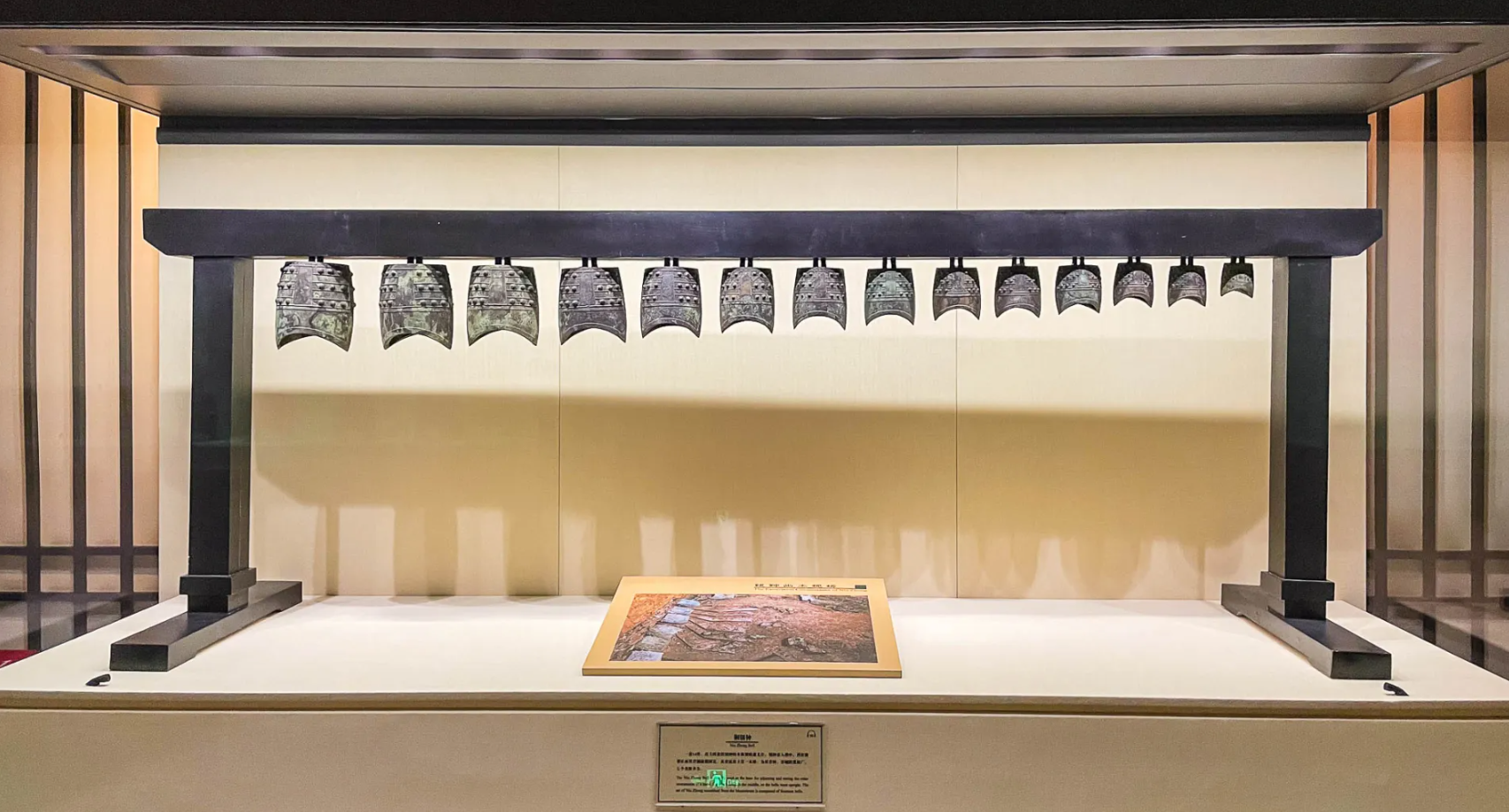
Well-preserved bronze bianzhong (serial bells) on display at the Museum of the Mausoleum of the Nanyue King, showcasing the exquisite ancient musical craftsmanship of the Nanyue kingdom
Museum of the Mausoleum of the Nanyue King (Guangzhou): A rarely crowded, world-class site built directly above a 2,000-year-old royal tomb. You can walk inside the original burial chamber and see the jade suit of the king, sewn with silk thread. English panels are extensive.
Guangdong Museum (Guangzhou): The region’s flagship museum, with outstanding galleries on Chaozhou woodcarving (intricate, gold-leafed screens), Duan inkstones, and the history of the Maritime Silk Road. Temporary exhibitions are often outstanding; check the schedule. English audio guides available.
Guangxi Museum of Nationalities (Nanning): A stunning architectural space that explores the cultures of Guangxi’s 12 indigenous groups, Zhuang, Dong, Yao, Miao, through textiles, silverwork, and multimedia installations. A culturally sensitive, visually rich experience.
For the Contemporary Art Devotee
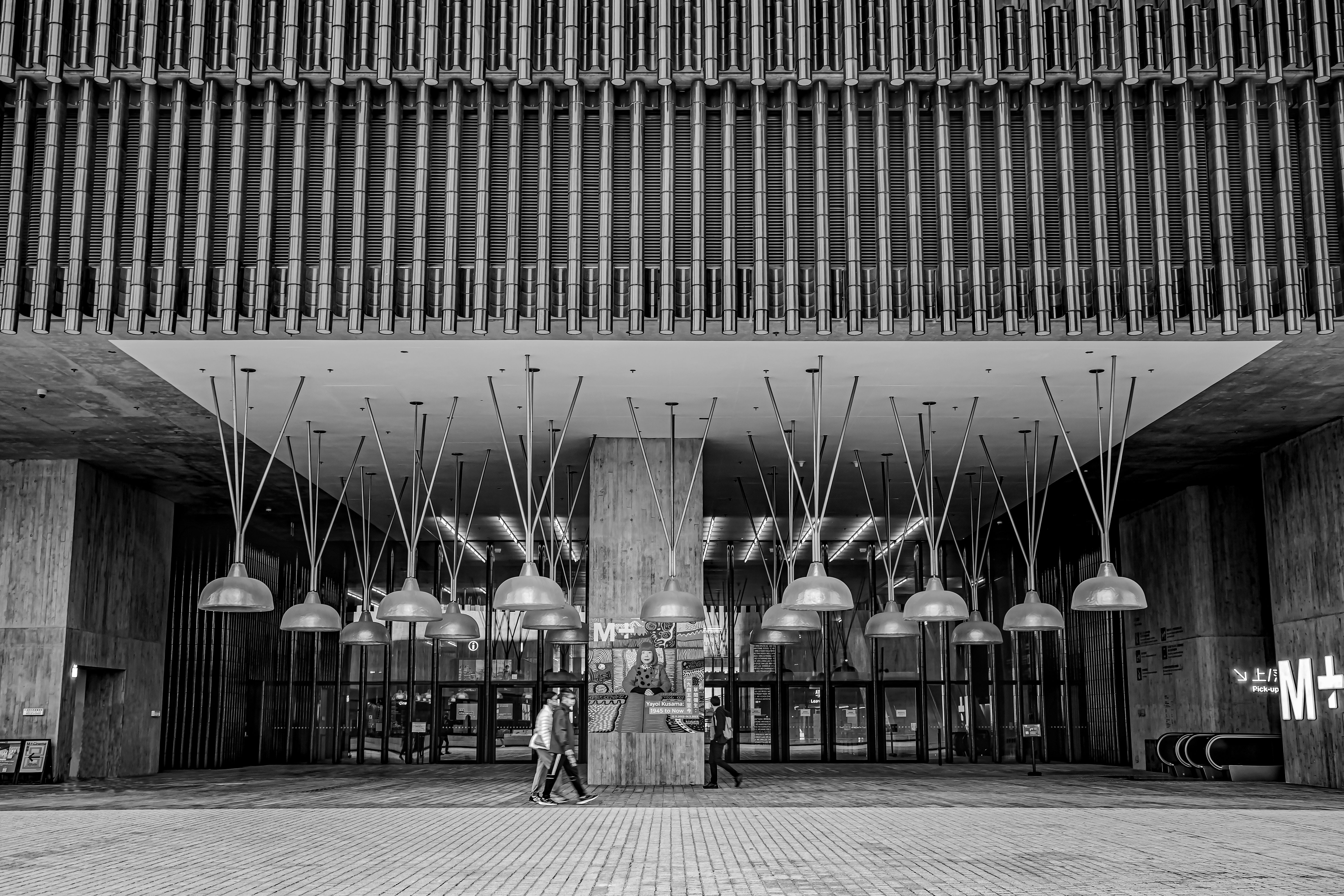
Black and white photo of a M plus museum entrance in Hong Kong with hanging lamps
M+ (Hong Kong): A world-class visual culture museum in the West Kowloon Cultural District. Its collections of contemporary Chinese art, design, architecture, and moving images are globally significant. Full English bilingual presentation throughout.
Times Museum (Guangzhou): A non-profit experimental art space in a residential neighbourhood, known for provocative, conceptually sharp contemporary shows. A favourite of the international art crowd. Labels are bilingual.
Macao Museum of Art (Macau): Overlooking the sea, this museum houses collections that bridge Chinese and European traditions, reflecting Macau’s hybrid identity. Excellent temporary exhibitions, often with English catalogues.
For Those Drawn to Folk Craft and Living Traditions
Foshan Ancestral Temple Museum (Foshan): Not a static building but a living complex where Cantonese opera, lion dance, and martial arts demonstrations happen daily. The temple itself is a masterpiece of southern Chinese architecture, and the museum holds exquisite paper-cuts, ceramics, and ironwork.
Hainan Binglanggu Li & Miao Cultural Heritage Park (Baoting, Hainan): A living museum in a tropical valley, where Li women demonstrate the ancient skill of weaving Li brocade, a UNESCO Intangible Cultural Heritage. It’s hands-on and deeply atmospheric.
For the Science and Innovation Enthusiast
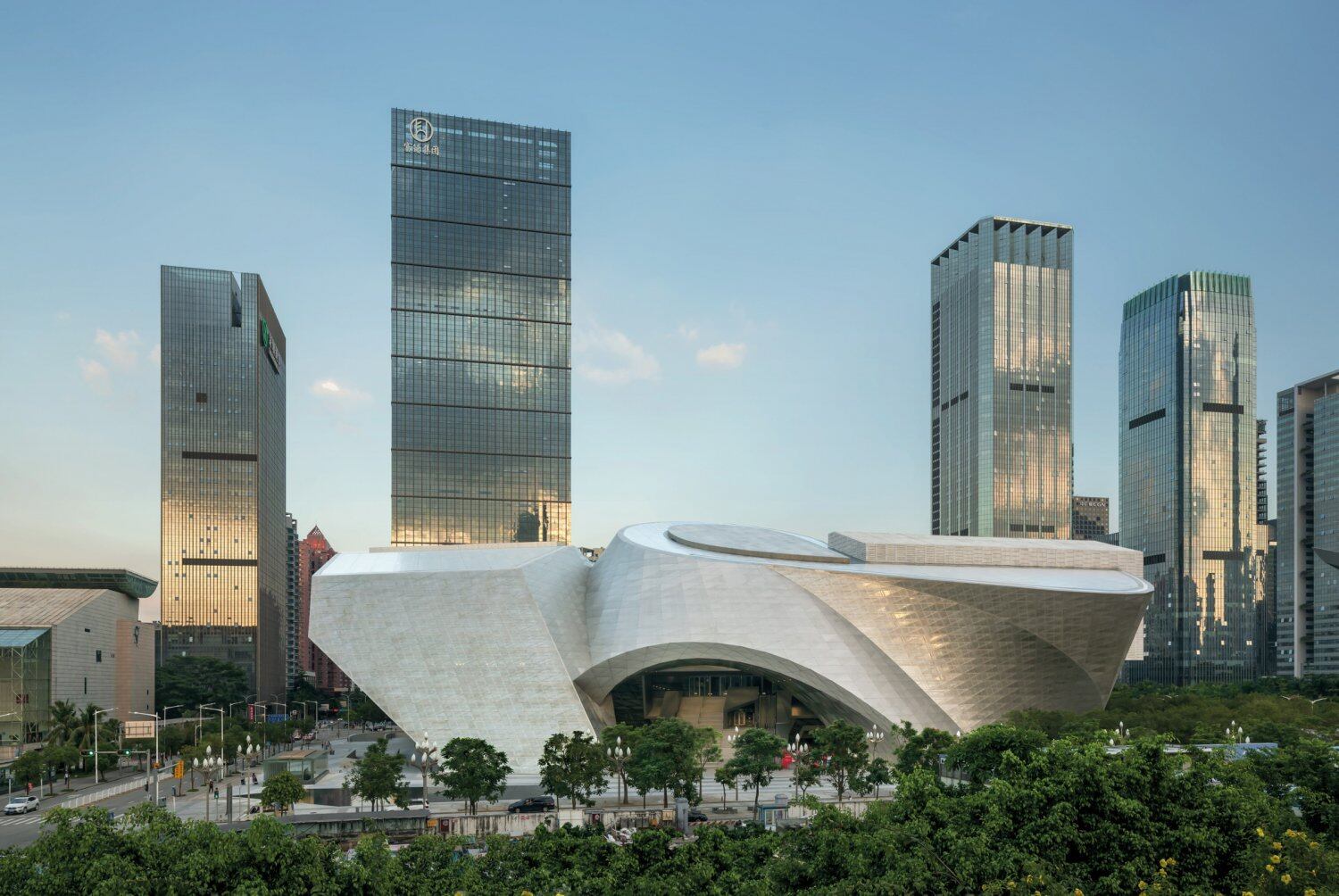
Futuristic sculptural architecture of Shenzhen Museum of Contemporary Art and Urban Planning, framed by sleek glass skyscrapers in Civic Center
Shenzhen Museum of Contemporary Art and Urban Planning (MOCAPE): A striking building housing two institutions under one roof. The urban planning floor is a hit with visitors, a vast scale model of Shenzhen that shows how a fishing village became a megacity. Great for understanding China’s urban revolution.
Guangdong Science Center (Guangzhou): The world’s largest science centre by floor area, located on a small island. While aimed partly at families, its exhibitions on green energy, robotics, and the human body are genuinely impressive, with many interactive elements labelled in English.
Practical Habits That Enrich the Experience
Carry your passport. Nearly every museum requires it for entry, even with a pre-booked ticket.
Go early on weekdays. Popular sites thin out considerably on Tuesday and Wednesday mornings, giving you a more contemplative experience.
Combine with a related live experience. After visiting the Foshan Ancestral Temple, watch an evening lion dance performance nearby. After the Guangxi Museum of Nationalities, take a day trip to a Dong village to see the drum towers and covered bridges in their original context. Into South China can design these fluid, theme-based days for you.
Let Into South China Be Your Cultural Bridge
Exhibitions reveal a China that guidebooks often miss. But the logistics, from payment systems to reservation games to language gaps, can keep them out of reach for independent travellers. That’s exactly where Into South China steps in. As a specialist inbound travel agency for Guangdong, Guangxi, Hainan, Hong Kong, and Macau, we curate exhibition-focused itineraries that align with your passions. We pre-book all tickets, secure those hard-to-get reservations, arrange English-speaking cultural guides, and blend museum visits with real-world encounters, a village where the craft on display is still made, and a studio where a contemporary artist works today. You arrive curious, and we handle the rest.
China’s cultural treasures don’t have to remain behind glass, understood only by those who read Mandarin. With the right preparation and a local partner who speaks the culture fluently, they open up into one of the most rewarding travel experiences on earth. Ready to walk in? Contact Into South China and let’s design a journey that feeds your curiosity and solves every practical hurdle before you even pack.