
There is a China that exists beyond the skyscrapers of Shanghai and the Forbidden City of Beijing. It is a China of winding rivers, ancient village lanes, and the lingering aroma of morning tea. This is the China of the Pearl River Delta, the heartland of Cantonese culture, where history is not locked in museums but lived in the rhythm of daily life.
For international travelers seeking a journey that blends breathtaking natural scenery with immersive cultural experiences, the triangle of Guangzhou, Foshan, and Zhaoqing offers exactly that. This is not a route for hurried sightseeing. It is a slow immersion into the soul of Lingnan, the southern region of China that has given the world dim sum, martial arts, and some of the country's most poetic landscapes.
This journey, like so many unforgettable China Travel experiences, begins where the past and present intertwine. And it reveals a side of the country that few guidebooks capture.
Guangzhou: Where Ancient Traditions Meet Modern Energy
The journey starts in Guangzhou, a city that has been a trading port for over two thousand years. Here, the Cantonese have perfected the art of living well, and nowhere is this more evident than in the city's morning tea culture. Before diving into sightseeing, join the locals at a traditional teahouse. The ritual of yum cha (drinking tea) is more than a meal; it is a daily ceremony of connection, where families and friends gather over steaming baskets of dumplings, rice rolls, and egg tarts. This is the authentic pulse of Guangzhou, and it sets the tone for the days ahead.
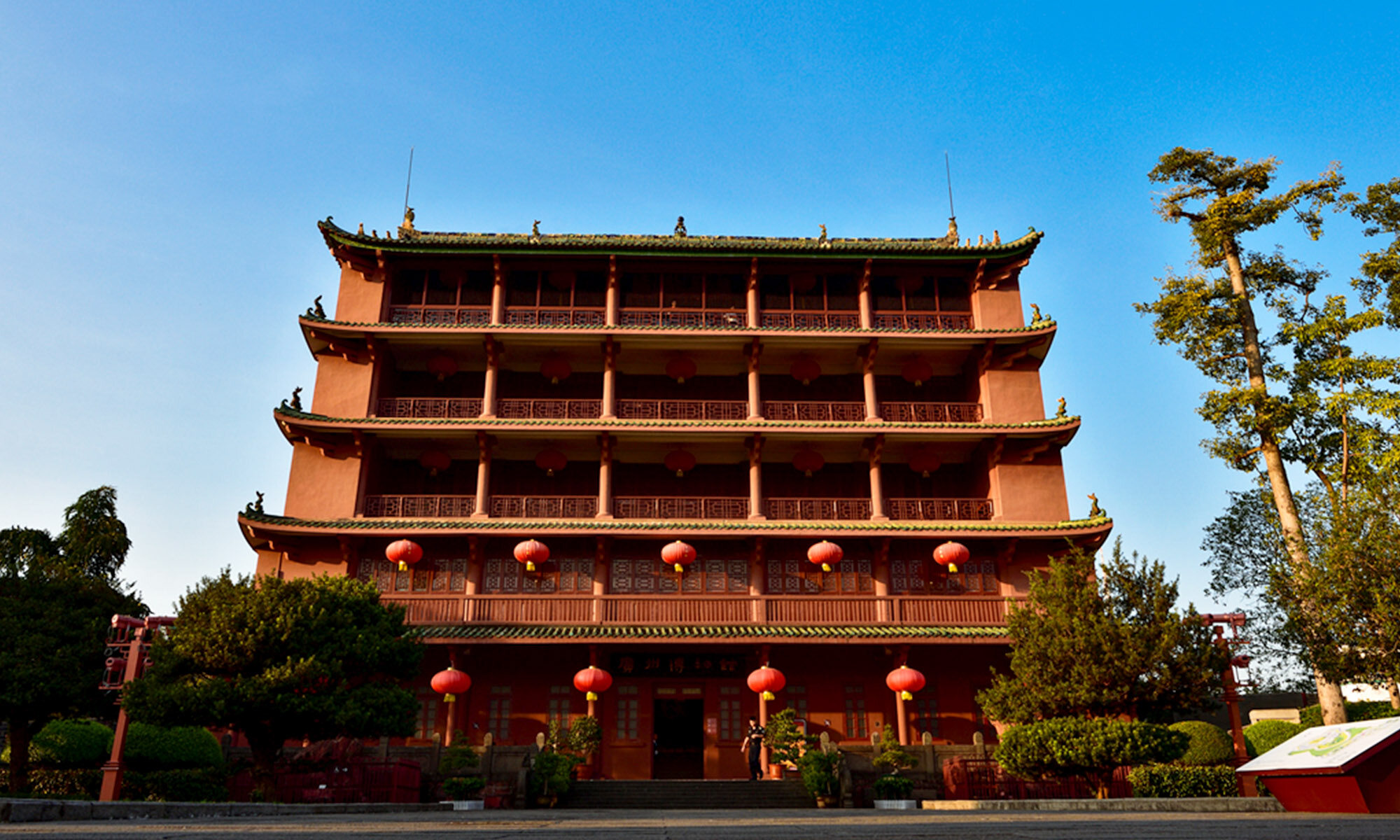
A stunning daytime view of Zhenhai Tower (Guangzhou Museum), the famous five-storey historical gem of Guangzhou
From the teahouse, make your way to Yuexiu Park, the city's largest green space and home to the iconic Five Rams Statue, the symbol of Guangzhou. The park also houses Zhenhai Tower, a five-story structure that offers panoramic views of the city and houses the Guangzhou Museum. Walking through these ancient grounds, you can feel the layers of history that have shaped this region.
Just a short distance away lies Chen Clan Ancestral Hall, a masterpiece of Lingnan architecture that many travelers consider an essential stop on any China Travel itinerary. Built in the late 19th century, this complex is not merely a temple but a celebration of Cantonese craftsmanship. Its halls are adorned with intricate wood carvings, stone sculptures, and ceramic figurines that tell stories of folklore, opera, and daily life. The building itself is a museum of Cantonese art, and wandering through its courtyards feels like stepping into a living gallery.
In the afternoon, explore Yongqing Fang, a revitalized historical district in the heart of old Guangzhou. This maze of alleyways has been transformed into a cultural hub where traditional architecture meets contemporary creativity. Here, you can watch Cantonese opera performers in training, browse shops selling handcrafted goods, or simply sit at a café and watch the world go by. The juxtaposition of old and new is quintessentially Guangzhou.
As evening falls, head to Zhujiang New Town, the city's gleaming financial district. Walk along the Pearl River, where the skyline comes alive with light, and the iconic Canton Tower pulses with color. A river cruise offers a different perspective, with the illuminated skyline reflecting on the water. It is a moment of stillness amid the urban energy.
Foshan: The Birthplace of Kung Fu and Lion Dance
A short train ride from Guangzhou brings you to Foshan, a city that has given the world two of its most recognizable cultural exports: Wing Chun kung fu and the Cantonese lion dance. For travelers who want to go beyond sightseeing and into the heart of living traditions, Foshan is an essential stop.
The spiritual heart of the city is the Foshan Ancestral Temple, a sprawling complex that dates back nearly a thousand years. This is not just a temple; it is a cultural monument where history comes alive. Inside, you will find the Ip Man Hall, dedicated to the Wing Chun grandmaster who taught Bruce Lee, and the Wong Fei-hung Memorial Hall, honoring the legendary folk hero and martial artist.
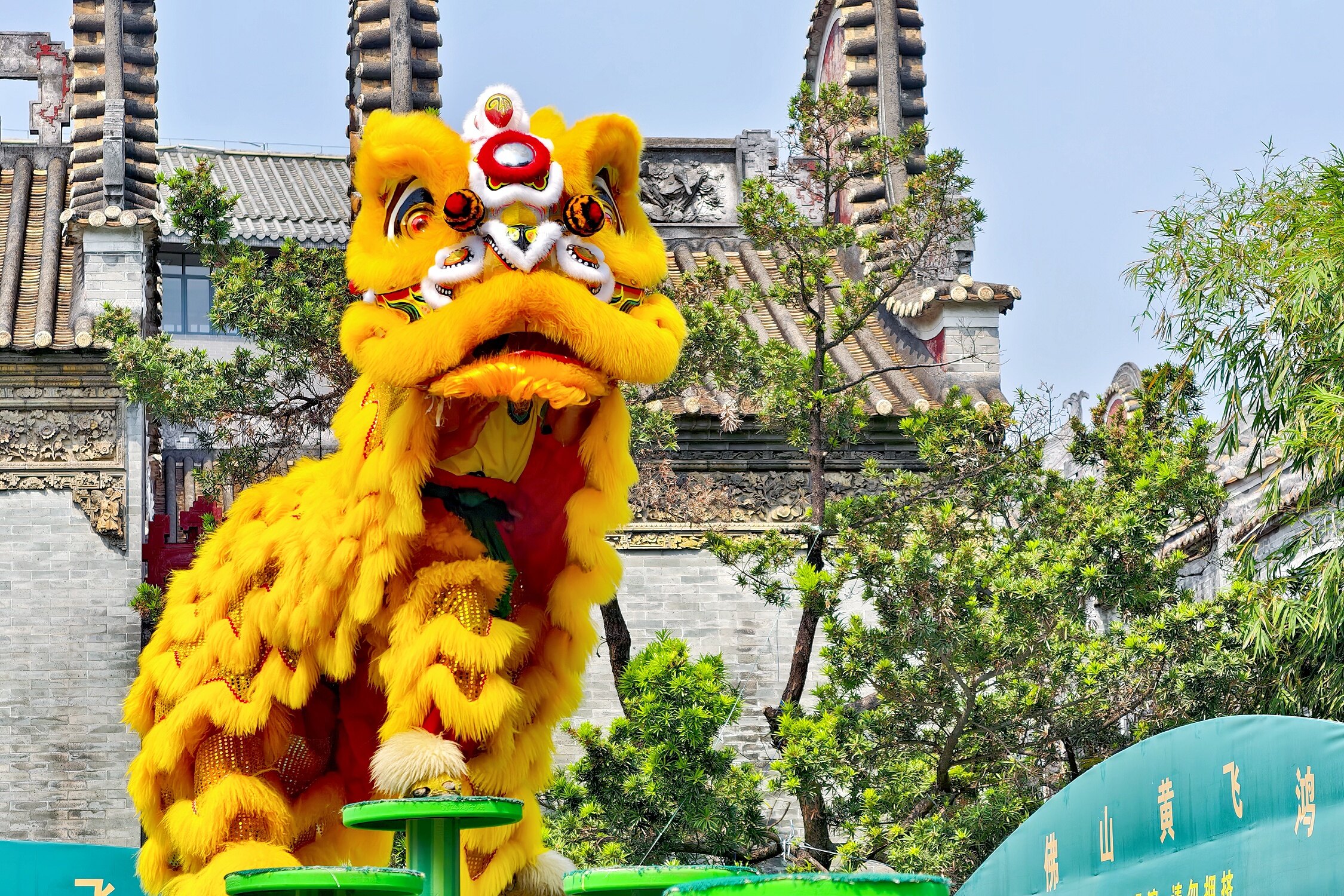
Iconic Foshan lion dance: experience authentic Lingnan folk tradition at Foshan Ancestral Temple
One of the highlights of any visit is the daily lion dance and martial arts performance, held in the temple's courtyard. The lion dance is a breathtaking spectacle of acrobatics and rhythm, with performers in colorful lion costumes mimicking the movements of the mythical beast. Watching it here, in the very place where this tradition was nurtured, is a profound experience. The temple also houses the Wanfu Stage, one of China's oldest surviving Cantonese opera stages.
Beyond the temple, explore Lingnan Tiandi, a beautifully restored district of traditional qilou (arcade buildings) that now houses boutique shops, cafes, and restaurants. Here, you can sample authentic Foshan cuisine, known for its bold flavors and fresh ingredients. For those interested in craftsmanship, the Nanfeng Ancient Kiln offers a glimpse into Foshan's centuries-old ceramics tradition. This is one of the oldest continuing-use kilns in the world, and visitors can watch artisans at work and even try their hand at pottery.
Foshan is also home to some of the most exquisite classical gardens in southern China. Liang Garden, with its serene ponds, rockeries, and pavilions, offers a quiet retreat from the city's bustle. It is a reminder that in Guangdong, even amidst urban development, the Cantonese have always made space for beauty and contemplation.
Zhaoqing: A Landscape Painted by Poets
The final leg of the journey takes you to Zhaoqing, a city that feels like a landscape from a classical Chinese painting. Located about an hour by high-speed rail from Foshan, Zhaoqing is where the urban energy of Guangzhou and Foshan gives way to serene mountains and tranquil waters.
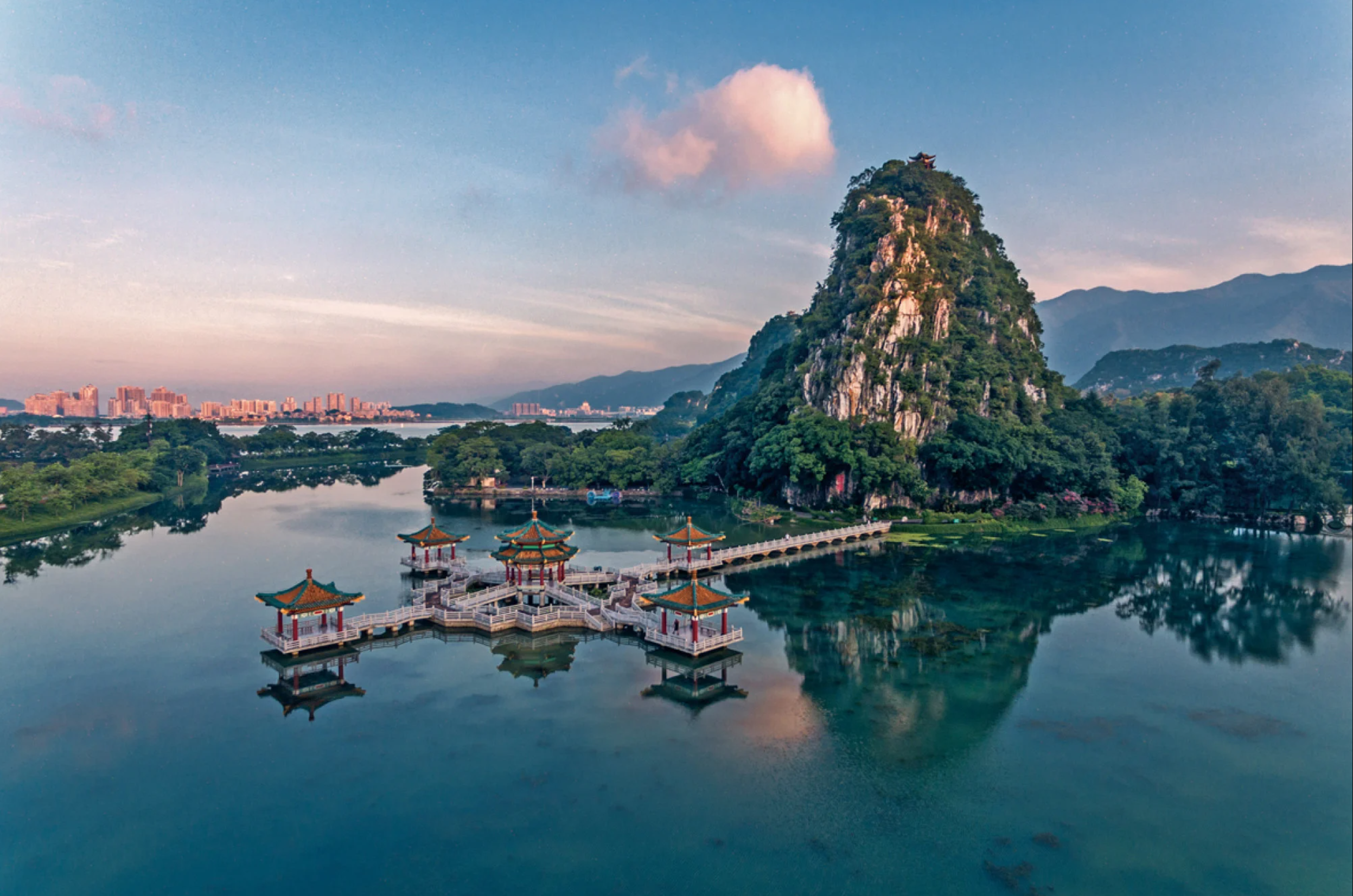
Seven Star Crags in Zhaoqing, a nature’s scroll painting of Lingnan
The crown jewel of Zhaoqing is Qixingyan, or the Seven Star Crags, a scenic area often called the "Number One Wonder of Lingnan". This is a landscape of limestone peaks rising from a sparkling lake, connected by bridges and dotted with ancient pavilions. The crags are named after the seven stars of the Big Dipper, and each peak has its own character and legend. Visitors can explore the area on foot, by boat, or by sightseeing bus, taking in the caves, temples, and lush greenery that have inspired poets for centuries.
One of the most memorable experiences at Qixingyan is a boat ride into Shuangyuan Cave, where stalactites and stalagmites create an otherworldly atmosphere. The cave is 300 meters long and features two water outlets, hence its name, which means "double source." Another highlight is Longyan Cave, accessible by boat and then on foot through a steep stone staircase. For those who want to take in the full panorama, climbing Tianzhu Rock offers the best view of the entire park.
Another natural wonder awaits at Dinghu Mountain, a UNESCO Biosphere Reserve and one of China's most famous natural attractions. The mountain is covered in dense subtropical forest, with waterfalls, streams, and ancient temples scattered throughout. A hike here is not just exercise; it is a meditation, a chance to breathe deeply and reconnect with nature. The mountain's name means "Tripod Lake," and legend has it that the Yellow Emperor once cast a tripod here before ascending to heaven.
Back in the city, Zhaoqing offers a quieter pace of life. The Star Lake area, where many visitors choose to stay, is particularly lovely in the evening, when the lights of the lakeside promenade reflect on the water. The Song City Wall, dating back to the Song Dynasty, offers a walk through history, and a climb up the Chongxi Pagoda provides a sweeping view of the West River.
The Journey Continues
This triangle of cities offers a complete China Travel experience: the vibrant modernity of Guangzhou, the living traditions of Foshan, and the serene landscapes of Zhaoqing. But more than that, it offers a glimpse into the Cantonese way of life – a philosophy that values family, food, and connection to the land.
The transportation between these cities is seamless. High-speed rail connects Guangzhou to Foshan in under 30 minutes and Foshan to Zhaoqing in about an hour. This makes it easy to travel at a relaxed pace, spending several days in each city and truly getting to know their rhythms.
For those who wish to extend their journey, the region offers countless detours. From Guangzhou, you can venture into the countryside of Conghua, with its hot springs and ancient villages. From Foshan, the culinary paradise of Shunde is just a short trip away. And from Zhaoqing, the bamboo forests and rural landscapes of Guangning offer a glimpse into a simpler way of life.
But even if you stick to the main route, this journey will stay with you. It is a journey that reminds you why people travel: not to collect stamps in a passport, but to feel a place, to taste its flavors, to hear its stories, and to carry a piece of it home.
Ready to experience the soul of Lingnan? Contact Into South China to start planning your journey through Guangzhou, Foshan, and Zhaoqing. Our local guides, born and raised in Guangdong, will open doors that independent travelers cannot find on their own. From morning tea in Guangzhou to lion dance in Foshan to sunset over the Seven Star Crags, we handle every detail so you can focus on what matters: the journey itself.
The mountains are calling. The tea is brewing. The lion is about to dance.
Client Review
"An unforgettable journey through South China's most breathtaking landscapes and cultural treasures. Every detail was perfectly arranged, from authentic local experiences to comfortable accommodations. Highly recommended for travelers seeking genuine immersion!"
Trip Highlights
- ✓
Authentic Local Experiences
Immerse yourself in daily life, culture, and traditions of South China
- ✓
Scenic Natural Wonders
Breathtaking landscapes from karst peaks to tropical beaches
- ✓
Culinary Discoveries
Taste regional specialties and authentic local flavors
- ✓
Cultural Heritage Sites
Explore ancient temples, historic architecture, and UNESCO sites


