Choosing where to sleep is one of the most personal decisions in travel. For some, the hotel is the highlight, a sanctuary of crisp sheets, skyline views, and impeccable service. For others, it’s merely a clean place to drop a backpack before the next adventure. In South China, the accommodation landscape is vast and rapidly evolving, but it does not always cater to international expectations in obvious ways. Understanding your own style and knowing a few insider tips can turn a good trip into an unforgettable one. Here, we break down the options by traveler type, so you can rest easy, literally and figuratively.
1. The High-Net-Worth Luxe Seeker: Comfort, Service, and Prestige
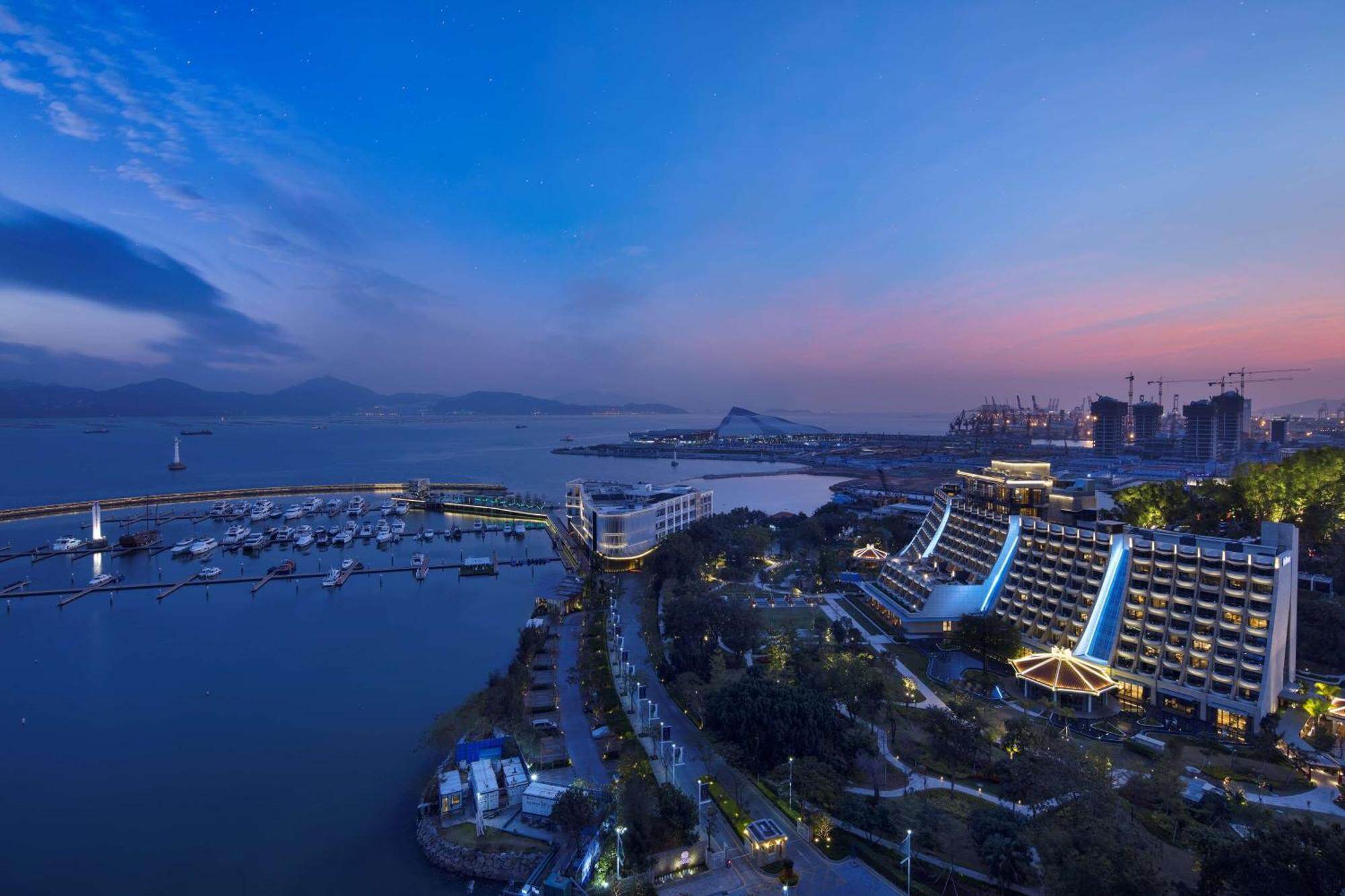
Dusk over Hilton Shenzhen Shekou Nanhai, where sleek coastal architecture meets a tranquil yacht harbour and soft sunset bay views
You expect seamless check-ins, English-speaking concierges, plush bedding, and amenities that rival the world’s best. South China delivers brilliantly in this category. International luxury chains are well-represented in Guangzhou, Shenzhen, Hong Kong, and Macau. The Hilton Shenzhen Shekou Nanhai offers waterfront serenity with a distinctly Mediterranean villa wing. In Guangzhou, the Mandarin Oriental and Four Seasons occupy the upper floors of iconic skyscrapers in Zhujiang New Town, with panoramic Pearl River views. For a legendary experience, book the White Swan Hotel on Guangzhou’s Shamian Island, a landmark of Cantonese hospitality since the 1980s, famed for its indoor waterfall, refined dim sum, and deep ties to overseas Chinese history. Across the Pearl River Delta, the recently opened St. Regis Zhuhai provides butler service and Macau skyline vistas. In Haikou, the Ritz-Carlton anchors a golf and hot spring complex, while Macau’s Cotai Strip is a playground of palatial suites at the Banyan Tree, Wynn Palace, or Grand Lisboa Palace. These properties offer private airport transfers, multilingual staff, and often a dedicated travel desk that can arrange bespoke excursions, exactly the frictionless experience you seek.
2. The Budget-Savvy Youth and Solo Backpacker: Value, Vibe, and a Place to Crash
You’re young, social, and want your money to go into street food, entrance tickets, and night markets, not a room you’ll barely see. In South China, hostels and budget guesthouses exist in abundance, but here’s the truth: the hostel culture is not as internationally standardized as in Southeast Asia or Europe. While a 2024 policy change formally removed the requirement for hotels to hold a special “foreign guest license,” many small, budget, and rural accommodations still decline foreign travelers, not because the law forbids them, but because they lack experience with mandatory guest registration, worry about data entry mistakes and potential fines, and have no English-speaking staff. The legal barrier is gone; the practical hurdles remain.
Your smartest move is to target hostels with established international reputations. In Guangzhou, Lazy Gaga Hostel near Taojin caters to a mixed crowd and often has English-speaking staff, plus it’s close to the metro. In Guilin and Yangshuo, the backpacker scene is mature; hostels like Wada Hostel Yangshuo or Yangshuo Sudder Street Guesthouse are foreigner-friendly, organize social activities, and can book Li River trips. In Hong Kong, options like Hop Inn on Carnarvon or Mahjong Hostel in Tsim Sha Tsui are clean, compact, and run by English-speaking teams. Hainan’s surf town of Riyue Bay has several youth hostels popular with the international wave-riding crowd, though communication can be patchy. WeChat translation becomes your friend. A crucial tip: always confirm before booking that the property is willing and able to complete the required guest registration and provide the necessary documentation. Into South China pre-screens and vets budget-friendly accommodations to ensure they meet these requirements, removing the worry so you can focus on your adventure.
3. The Family Vacationer: Space, Safety, and Kid-Friendly Amenities
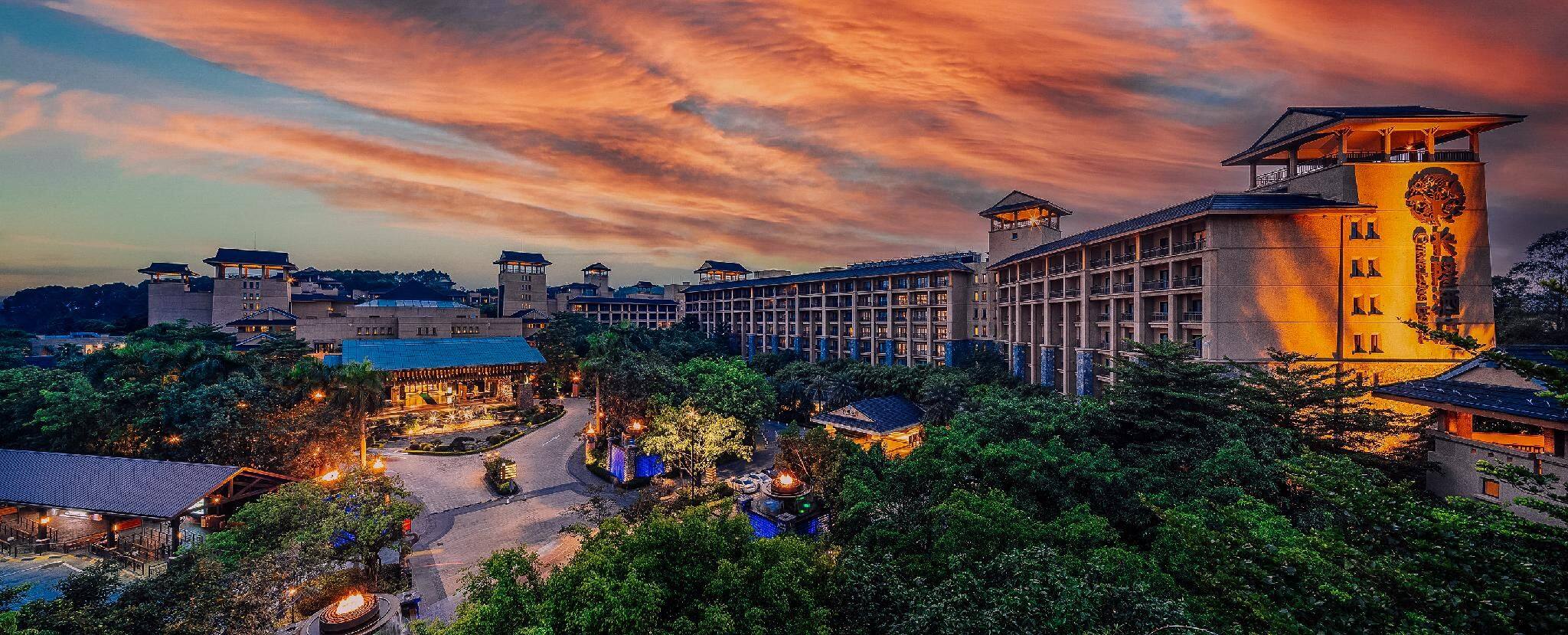
Spectacular sunset panorama of Chimelong Hotel Guangzhou, the flagship tropical resort of Chimelong Tourist Resort
Traveling with children changes the accommodation equation entirely. You need connecting rooms, reliable dining, possibly a kitchenette, and activities to keep young ones engaged. South China’s family-friendly options cluster around integrated resorts and beach destinations. On Hainan Island, the Atlantis Sanya is purpose-built for families, with a massive water park, aquarium, and kids’ clubs. Nearby, the Club Med Sanya offers all-inclusive packages with supervised children’s programs, giving parents genuine downtime. In Guangzhou, the Chimelong Hotel and Chimelong Hengqin Bay Hotel (Zhuhai) sit adjacent to their respective theme parks, providing safari-themed rooms and circus shows. For apartment-style living, Ascott and Somerset serviced residences across Guangzhou, Shenzhen, and Nanning provide full kitchens, laundry, and separate bedrooms, ideal for longer stays with picky eaters or nap schedules. English-speaking staff are generally reliable in these larger hotels, and high chairs, cribs, and child menus are available on request.
4. The Culture and Heritage Devotee: Sleeping Inside a Story
You don’t just want a bed; you want a sense of place, to fall asleep in a building with soul. This is where South China truly sparkles beyond the standard hotel box. In Guangdong’s Kaiping, several UNESCO-listed diaolou watchtowers have been sensitively converted into boutique guesthouses. Sleep in a stone fortress built by overseas Chinese a century ago, wake to misty rice paddies, and cycle between villages. In the Chaozhou old town, courtyard hotels like Chaozhou Han Yu Ge Inn wrap you in Ming and Qing dynasty architecture, with wooden lattices, tiled roofs, and gongfu cha tea sets in every room. For the ultimate Hakka immersion, cross into the Fujian-Guangdong border area to stay inside a genuine tulou earthen roundhouse. In Guangxi, Yangshuo’s countryside hides restored Qing dynasty farmhouses turned into intimate lodges, where karst peaks frame your window. These properties are often small, family-run, and have limited English, but the authenticity is unmatched. Booking through a specialist ensures you have a local contact to bridge any language gap and arrange transport, as many of these hidden gems are in rural locations with no metro station in sight.
5. The Wellness and Medical Traveler: Healing Surroundings
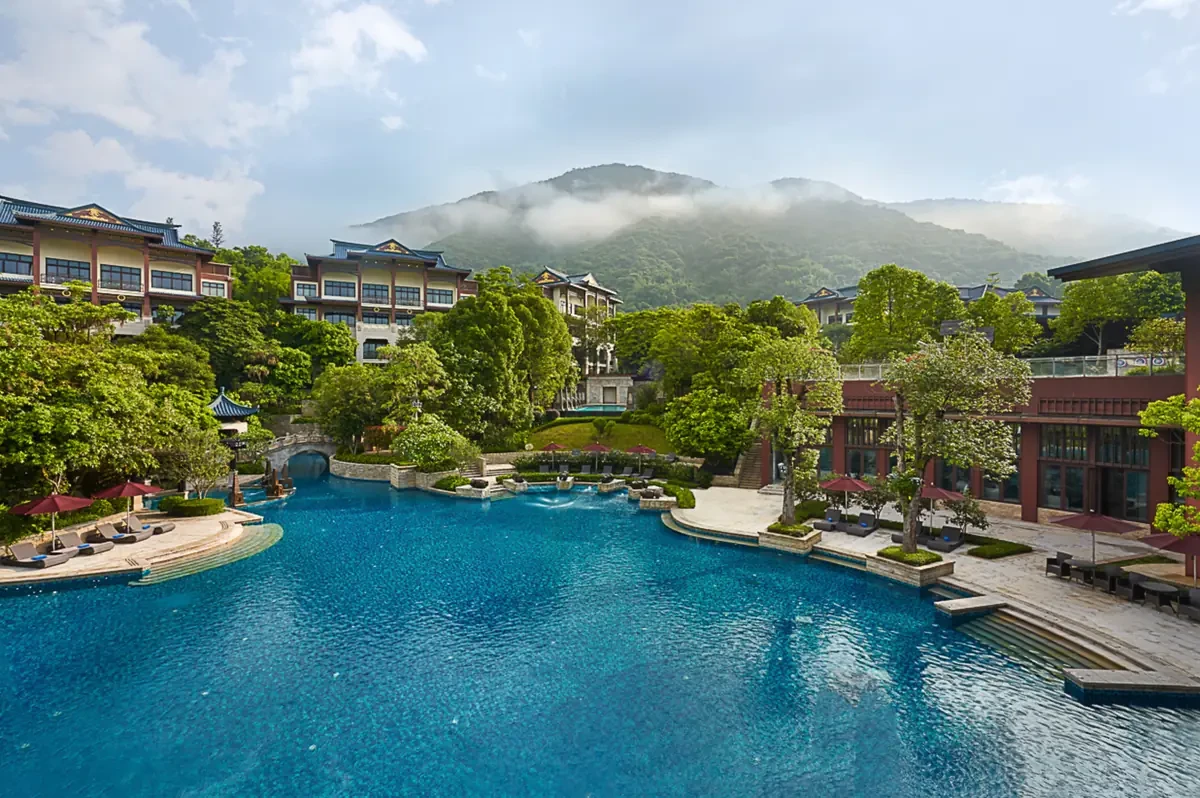
Serene mountain escape at Imperial Springs Conghua, a crystal clear pool framed by misty green peaks, and a classic Chinese courtyard design
If your South China journey centers on health, perhaps a Traditional Chinese Medicine consultation in Guangzhou, a recuperative hot spring retreat, or a quiet detox, your accommodation should amplify that healing intent. The hot spring town of Conghua, just north of Guangzhou, has been a wellness destination for centuries. Resorts like Imperial Springs or the more accessible Dusit Devarana Hot Springs & Spa combine thermal waters with mountain air and holistic treatments. On Hainan Island, the Shennong Hot Spring Resort in Baoting offers mineral pools in a lush, tropical valley. For those undergoing TCM treatment at Guangzhou’s Third Affiliated Hospital, nearby serviced apartments or quiet hotels in Liwan’s old quarter allow you to rest comfortably within walking distance of daily appointments. Into South China can match your wellness itinerary with a hotel that supports your recovery or rejuvenation goals, right down to dietary requirements and a quiet room facing a courtyard.
6. The Digital Nomad and Extended-Stay Traveler: Wi-Fi, Workspace, and Liveability
You’re staying two weeks or longer, working remotely, and need a functional home base. Reliable, high-speed internet, ideally unblocked, a desk, a nearby café scene, and laundry facilities. South China’s major cities now cater well to this tribe. In Shenzhen’s Nanshan district, serviced apartments like Somerset Grandview or Citic City M Hotel provide apartment-style living with coworking-friendly spaces and excellent connectivity. Guangzhou’s Tianhe district is dense with similar options from Ascott IFC to boutique apartment hotels in Zhujiang New Town. In more relaxed settings, a Dali-style vibe is emerging in Yangshuo’s outskirts, where several riverside guesthouses market themselves as digital nomad retreats, with communal kitchens, stable Starlink-assisted Wi-Fi, and long-stay discounts. Pro tip: always ask for a speed test screenshot if high-speed internet is critical, as rural areas can be unpredictable. Into South China can verify workspace setups and arrange proper work-friendly rooms so you don’t find yourself taking video calls from a bathroom for the echo.
A Critical Note: Foreigner Registration and the End of the "Foreign Guest License"
A major policy shift in 2024 formally removed the requirement for hotels to hold a special foreign guest license. In theory, this means any hotel can now welcome international travelers. In practice, however, the situation is still catching up with the law. All accommodations are still required by law to record the basic details of every guest's stay and forward the information to the local public-security authorities within 24 hours of check-in, a standard public-safety procedure, similar to how hotels in many countries are obliged to share guest data with government bodies. While this is entirely routine for larger hotels, the process remains unfamiliar and intimidating for many smaller, budget, or rural establishments that never previously served foreign travelers. The data entry is detailed, mistakes can attract penalties, and local implementation varies. Some front desks still instinctively say, “Sorry, no foreign guests”, not out of discrimination, but out of inexperience and the anxiety of getting the paperwork wrong.
This is the single biggest accommodation friction point for foreign travelers today, especially backpackers and off-the-beaten-path explorers. The solution is not to avoid charming, local places, but to book them through a partner who pre-verifies their willingness and ability to check you in smoothly. Into South China does exactly this: we confirm registration capability, provide the hotel with your details in advance, and ensure you arrive at a warm welcome, not a confused refusal.
Let Into South China Match Your Stay to Your Story
At Into South China, we know that the right bed is the foundation of every great journey. We don’t just book rooms; we curate stays that align with who you are as a traveler. For luxury seekers, we secure VIP welcome amenities and upgrades through our network of top-tier hotels. For backpackers and budget adventurers, we hand-pick foreigner-friendly hostels and family-run inns that are safe, legal, and rich in character. For families, we ensure connecting rooms, cribs, and kid-friendly menus are waiting. For heritage lovers, we unlock the doors of tulou, diaolou, and courtyard homes that don’t appear on mainstream booking sites. And we do it all with English-speaking support, transparent pricing, and a genuine love for the region we call home. Contact us, tell us your travel style, and wake up in South China exactly where you belong.