Walk through any commercial street in Guangzhou or Shenzhen, and you'll encounter a curious sight: a queue of young people snaking out of a minimalist store, not for a new smartphone, but for a cup of tea. The cups they emerge holding look nothing like the steaming porcelain of a traditional teahouse. They're tall, transparent, and layered like a cocktail, jade-green tea at the bottom, a thick cap of pale cheese foam on top, perhaps a streak of purple grape pulp suspended in between. The drink is photographed before it's sipped. The brand logo on the cup is held outward, facing the street.
This is China's new-style tea (新茶饮) economy, a beverage industry now worth over $20 billion USD. It's not simply a trend, and it's certainly not a passing Instagram fad. It's a window into the consumption habits, identity politics, and cultural confidence of China's youngest adult generations, Millennials and Gen Z, and understanding it tells you far more about modern China than many museum exhibits ever could.
The Three Faces of New-Style Tea
To grasp the phenomenon, look at its three defining brands. Each represents a different consumer tribe and a different strategy for capturing the wallets and hearts of young China.
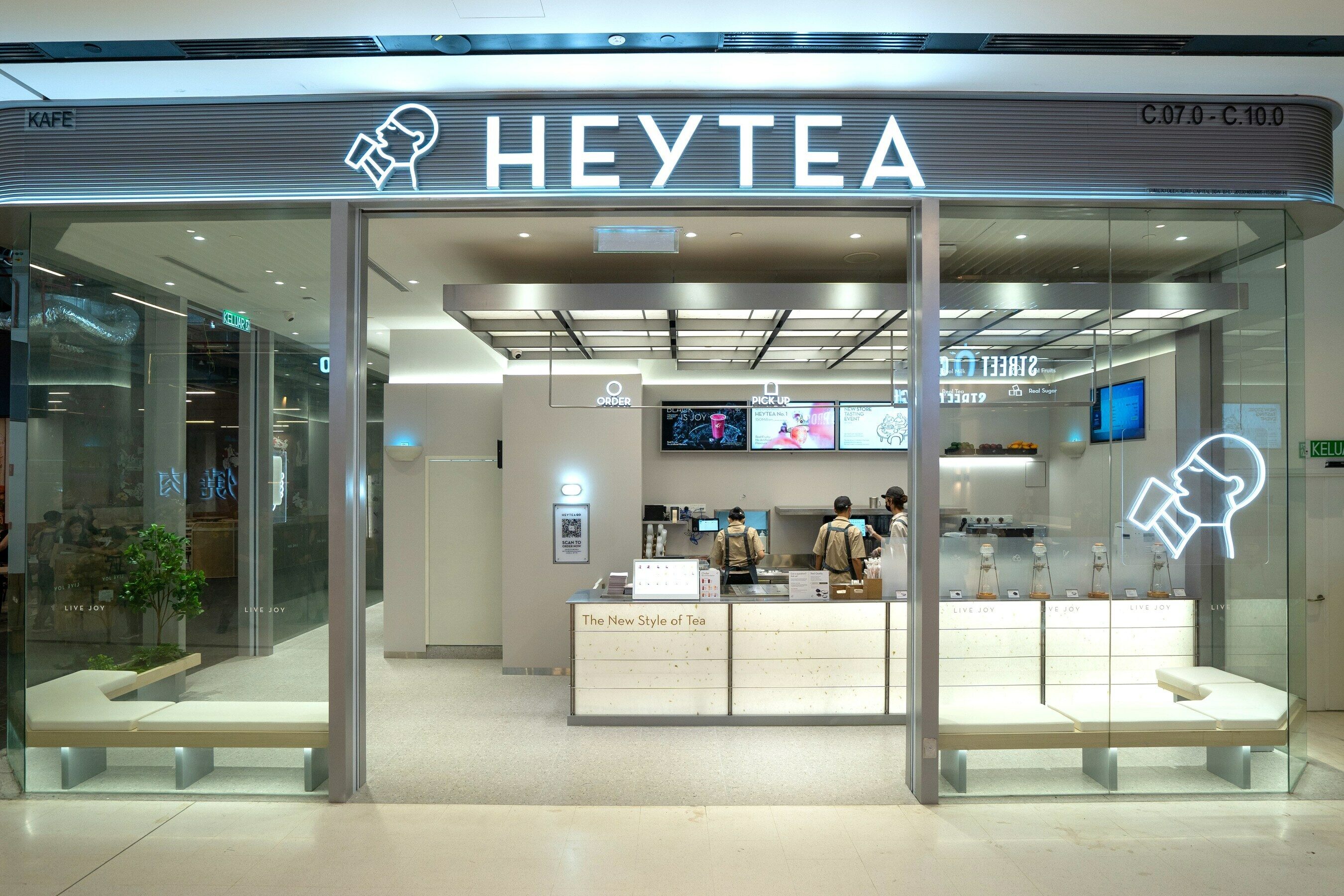
New Style Tea Originator HEYTEA Enters Malaysia by Setting up the First Store in Kuala Lumpur
Heytea (喜茶) was born in a narrow alley in Jiangmen, Guangdong, in 2012. It pioneered cheese tea, a pairing that sounds jarring to Western ears but is now iconic: a jasmine green tea base, cold-brewed, crowned with a thick, lightly salted cream cheese foam. The combination of sweet, savoury, and astringent became a viral hit. Today, Heytea operates as the Apple of the tea world. Its stores are sleek, its collaborations high-fashion (a 2023 pairing with Fendi made global headlines), and its prices often exceed 30 yuan (US$4). Ordering a Heytea is a declaration of taste, trend-awareness, and willingness to pay for premium ingredients. The brand fiercely protects its recipes and has fought legal battles against copycats. For its followers, Heytea represents innovation and aspiration.
Nayuki (奈雪的茶), founded in Shenzhen in 2015, takes a different approach. If Heytea is about the product, Nayuki is about the space. Its stores are large, softly lit, and designed for lingering, closer to a Starbucks Reserve than a grab-and-go kiosk. Crucially, Nayuki pioneered the "tea + bakery" model, pairing its fruit teas with house-baked soft European buns filled with cheese, matcha, or dragon fruit. The brand intentionally courts female consumers, with pastel interiors and delicate packaging, and its stores have become a dominant "third place" for young women to socialise after work. Nayuki's 2021 IPO on the Hong Kong Stock Exchange signalled that this was not a niche business, but a mainstream consumer force.
Then there is Mixue Bingcheng (蜜雪冰城), the brand that seems to break every rule. Founded in Henan in 1997, it has become the largest tea chain on earth by store count, with over 36,000 outlets, more than McDonald's globally. Its products are comically affordable: a fresh lemonade for 4 yuan, a soft-serve cone for 2 yuan. Its mascot is a rotund Snow King, and its earworm of a theme song went viral on TikTok globally. Mixue's stores are small, brightly coloured, and utterly unpretentious. Its target market is students, young workers in lower-tier cities, and anyone for whom a 30-yuan Heytea is a considered purchase. Mixue's staggering success reveals that China's consumer market is not one monolith but a pyramid, and the base of that pyramid is vast, value-conscious, and deeply loyal to brands that offer cheerful affordability.
What This Phenomenon Reveals About China's "New New Consumers"
The rise of these three brands, often in the same city block, is a masterclass in the psychology of China's post-95 and post-00 generations. Several key shifts are at play.
First, the "health-conscious indulgence" paradox. These consumers are far more sugar-aware than their parents. They read ingredient labels, they distrust powders and syrups, and they reward brands that market "real milk, real fruit, real tea." The full customisation of sugar and ice levels, a standard feature across new-style tea brands, is not a gimmick; it's a response to a generation that wants daily luxuries that feel somewhat virtuous. A 30-yuan cheese tea is a small pleasure that can be calibrated to align with personal wellness goals.
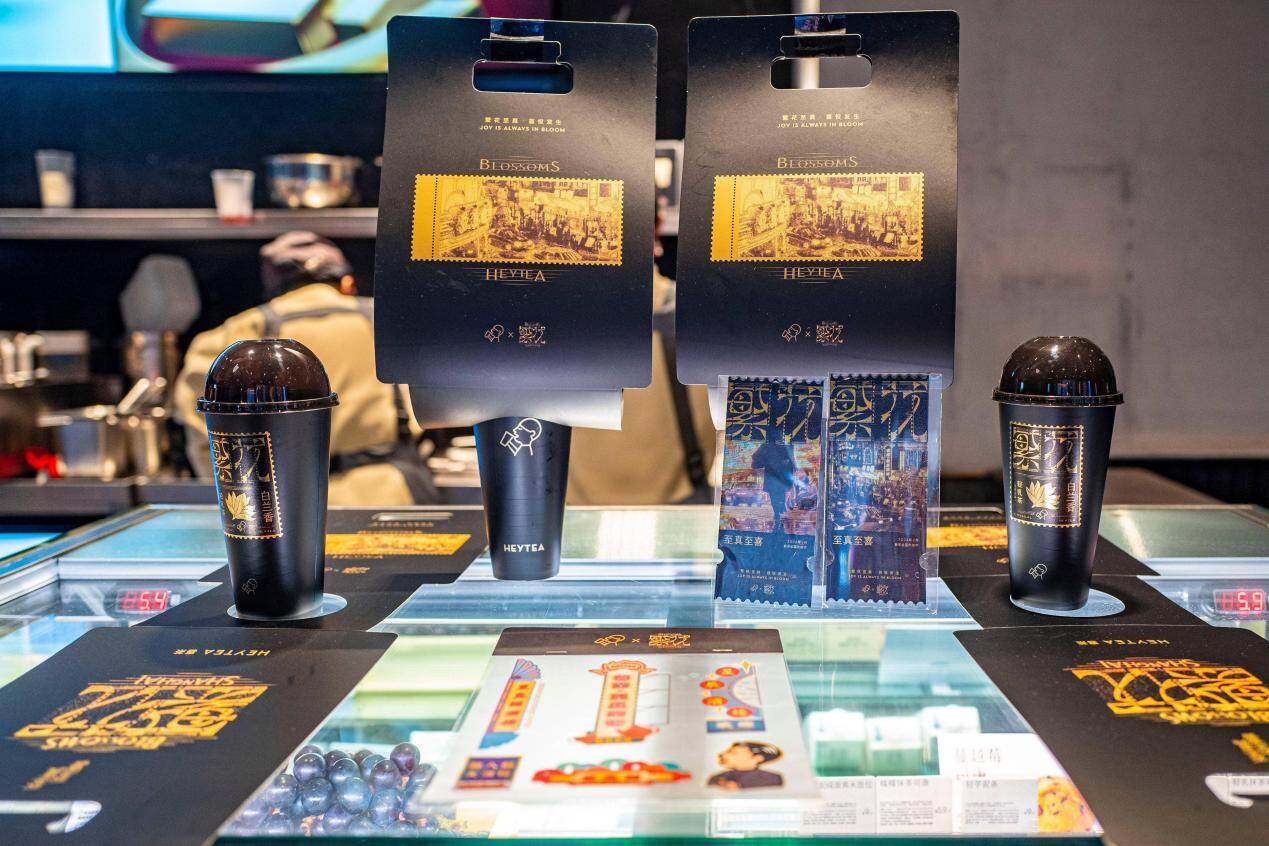
Drinks co-branded by bubble tea franchise HEYTEA and a popular TV drama
Second, visual storytelling as social capital. A new-style tea is constructed to be photographed. The gradient layers, the branded cup sleeve, the store lighting, all of it is content designed for Xiaohongshu and Douyin (China's Instagram and TikTok). Choosing an obscure seasonal flavour or a newly launched brand signals cultural savvy. For China's digital-native youth, the tea cup is a prop in the ongoing performance of personal identity. It says: I am current, I am discerning, I belong.
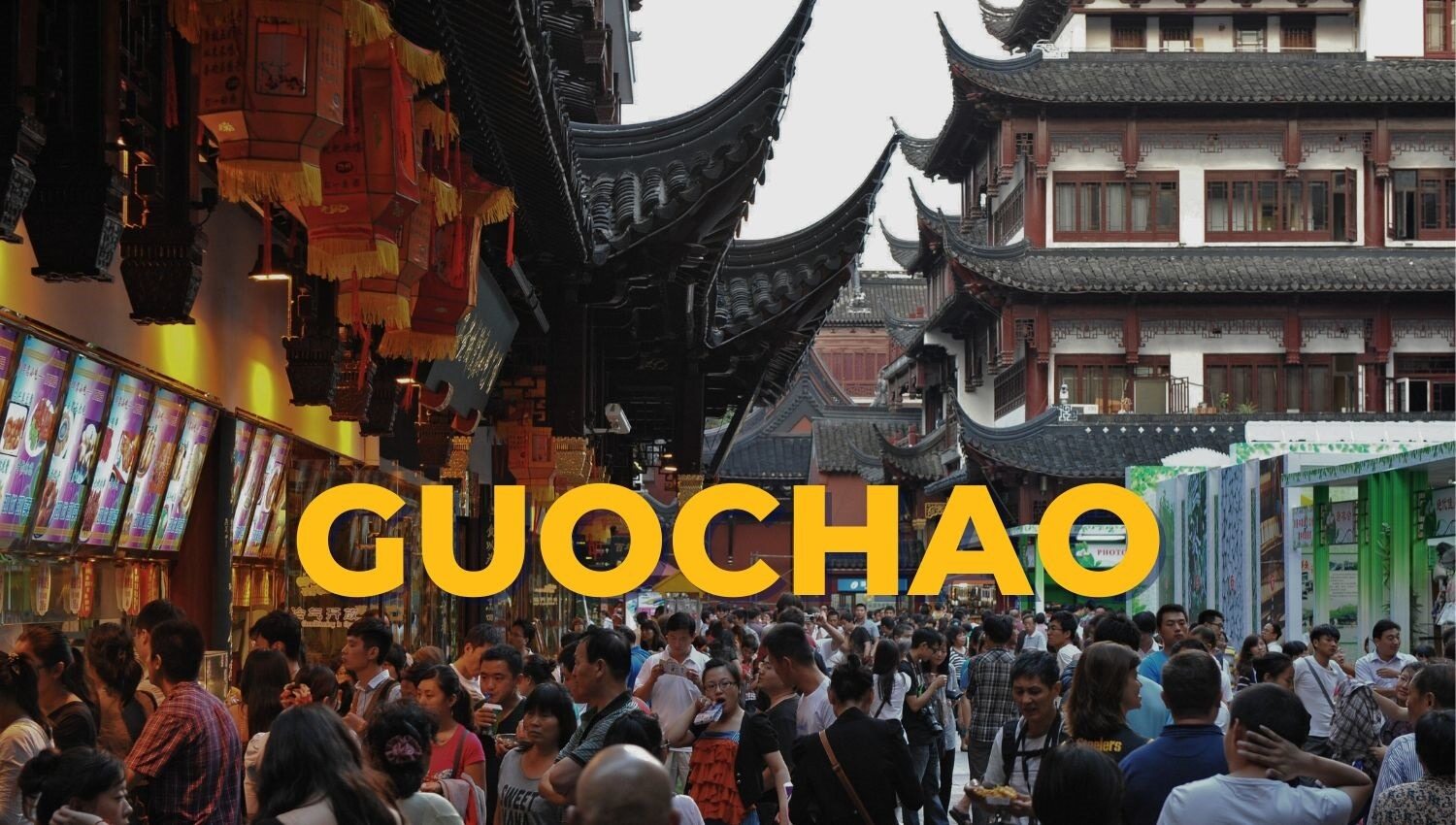
Translated as a “national trend,” Guochao embodies the growing favoritism of Chinese consumers towards products that incorporate Chinese elements such as symbols, artwork, patterns, colors, and cultural characters into their designs
Third, the Guochao (国潮) movement in liquid form. While Starbucks continues to expand in China, the most dynamic beverage brands today are proudly Chinese. They build their identity on traditional Chinese tea, oolong from Fenghuang Mountain, jasmine from Guangxi, reimagined in modern formats. This is not the tea of grandparents, but it claims the same lineage. Drinking a Heytea is an act of cultural pride as much as gustatory pleasure. It demonstrates a confidence in Chinese brands that simply didn't exist two decades ago. Guochao, the wave of patriotic consumption that has swept through fashion, beauty, and now food, finds one of its most perfect expressions in the new-style tea cup.
Fourth, the "experience economy" in everyday life. Nayuki's large-format stores, Heytea's designer interiors, and even Mixue's cheerful kiosks are all "third places" that rival the coffee shop. Young consumers aren't just buying a drink; they're buying a temporary membership to a space, an aesthetic, a community. The consumption of the beverage is inseparable from the consumption of the atmosphere.
Reading the Tea Leaves: What It Means for a Visitor
For a foreign visitor with an open mind, the new-style tea shop is as informative a cultural site as any temple or museum, perhaps more so, because it's alive, uncurated, and utterly of the moment. You don't need to drink the tea to read the signals (though it helps). Observe the queue. Notice the photography ritual: the tilt of the cup, the careful adjustment of the logo toward the light. Watch the demographic: the Heytea line is fashion-conscious and slightly older; the Nayuki interior hums with female friend groups; the Mixue counter is swarmed by students in school uniforms. These are the tribes of young China, self-sorting by brand and price point.
South China is the spiritual home of this phenomenon. Heytea was founded in Jiangmen, Nayuki in Shenzhen. The early experiments that shaped the industry, the first cheese foam, the first fruit-tea pairing, happened here, amid the cultural openness and spending power of the Pearl River Delta. For a traveller seeking to understand not just China's past but its present and future, a walk through the tea shops of Guangzhou's Tianhe district or Shenzhen's Nanshan is more revealing than any curated historical re-enactment.
Into South China: Your Cultural Interpreter
New-style tea is a phenomenon best understood with a local guide who can read the cultural codes, not just the menu. Into South China designs experiences for travellers who want to go behind the scenes of modern China, not to simply consume the culture, but to comprehend it. We can arrange a guided observation of a new-style tea cluster, explaining in real time the branding strategies, consumer behaviour, and generational shifts unfolding in front of you. Our bilingual guides can translate not just language, but the unspoken social signals: why that group chose Nayuki over the Heytea next door, how the seasonal osmanthus flavour connects to the traditional Chinese agricultural calendar, and why even a 2-yuan Mixue cone is part of a billion-dollar story about China's lower-tier city boom. We handle all logistics, so you can step into this world with a curious mind and no distractions. Contact Into South China to build a journey that goes beyond the tourist surface and into the living culture of modern South China.
China's new-style tea isn't just a drink. It's a mirror reflecting the ambitions, anxieties, and identities of a generation. Walk into a shop, and you're not just a customer, you're an observer of one of the most dynamic consumer revolutions on the planet. And you don't even have to like tea to appreciate the story.